
Amazon Vendor Negotiations (AVN) are Amazon’s annual commercial negotiations with first-party (1P) vendors that determine cost pricing, trade terms, funding commitments, and operational expectations. These negotiations directly shape vendor profitability, retail confidence, and long-term growth on Amazon. In 2026, AVNs are increasingly margin‑driven, data‑heavy, and operationally enforced, making preparation and scenario planning critical for brands operating under the 1P model.
What Are Amazon Vendor Negotiations?
Amazon Vendor Negotiations are Amazon’s structured commercial negotiations with first-party vendors. These discussions typically take place once per year and focus on resetting the financial and operational terms that govern the vendor relationship.
AVN aligns Amazon’s profitability goals with a vendor’s cost structure, supply reliability, and retail readiness. During this process, Amazon reviews how each brand contributes to margin, how consistently it executes operationally, and how scalable the relationship appears moving forward.
Stratably’s 2026 Amazon AVN Profitability Study shows that margin pressure intensified across most categories, with cost pricing, trade terms, and funding increasingly evaluated together rather than as isolated levers during negotiations.
Amazon Vendor Negotiations typically begin in late Q4 or early Q1, lasting several weeks or months, and usually conclude before Q2. During this period, Amazon engages vendors in active discussions around cost pricing, trade terms, and performance expectations for the year ahead. Unlike ad hoc term changes, Amazon AVN is a consolidated negotiation window where multiple levers are evaluated and traded together.
How the Amazon 1P Vendor Model Connects to AVN
Under the 1P model, brands sell inventory wholesale to Amazon, which then owns pricing, fulfillment, and customer experience. According to Stratably, 44% of brands report that Amazon is among their top three customers. The study also indicates that brands with higher revenue concentration through Amazon tend to experience greater sensitivity to AVN outcomes, particularly when margin recovery becomes a priority at the account level.
AVN exists specifically because Amazon acts as the retailer of record. Unlike third-party sellers, 1P vendors negotiate wholesale costs, trade terms, and service expectations rather than paying standardized marketplace fees.
During Amazon 1P Vendor Negotiations:
- Amazon may request cost reductions to improve retail margin
- Ownership of inventory risk can shift through operational requirements
- Brands may assume greater funding responsibility for promotions and logistics
This contrasts with the third-party (3P) model, where sellers pay fixed platform fees and have more control and flexibility. AVN effectively determines how risk and profitability are allocated between Amazon and the brand.
The Core Components of Amazon Vendor Negotiations
AVNs are built around a set of commercial and operational levers that Amazon evaluates together. While the structure can vary by category and region, the same core components consistently shape negotiation outcomes for 1P vendors. Concessions in one area often increase pressure in another, and the full impact is rarely visible unless terms are reviewed holistically.
Cost Pricing and Margin Expectations
Cost pricing sits at the center of every AVN discussion, and Amazon evaluates profitability at multiple levels:
- ASIN‑level contribution margin
- Brand‑level profitability consistency
- Category benchmark performance
Amazon reviews profitability at both the ASIN and account levels. Products that underperform on margin or carry added operational complexity often attract the most scrutiny, even when overall brand revenue remains strong.
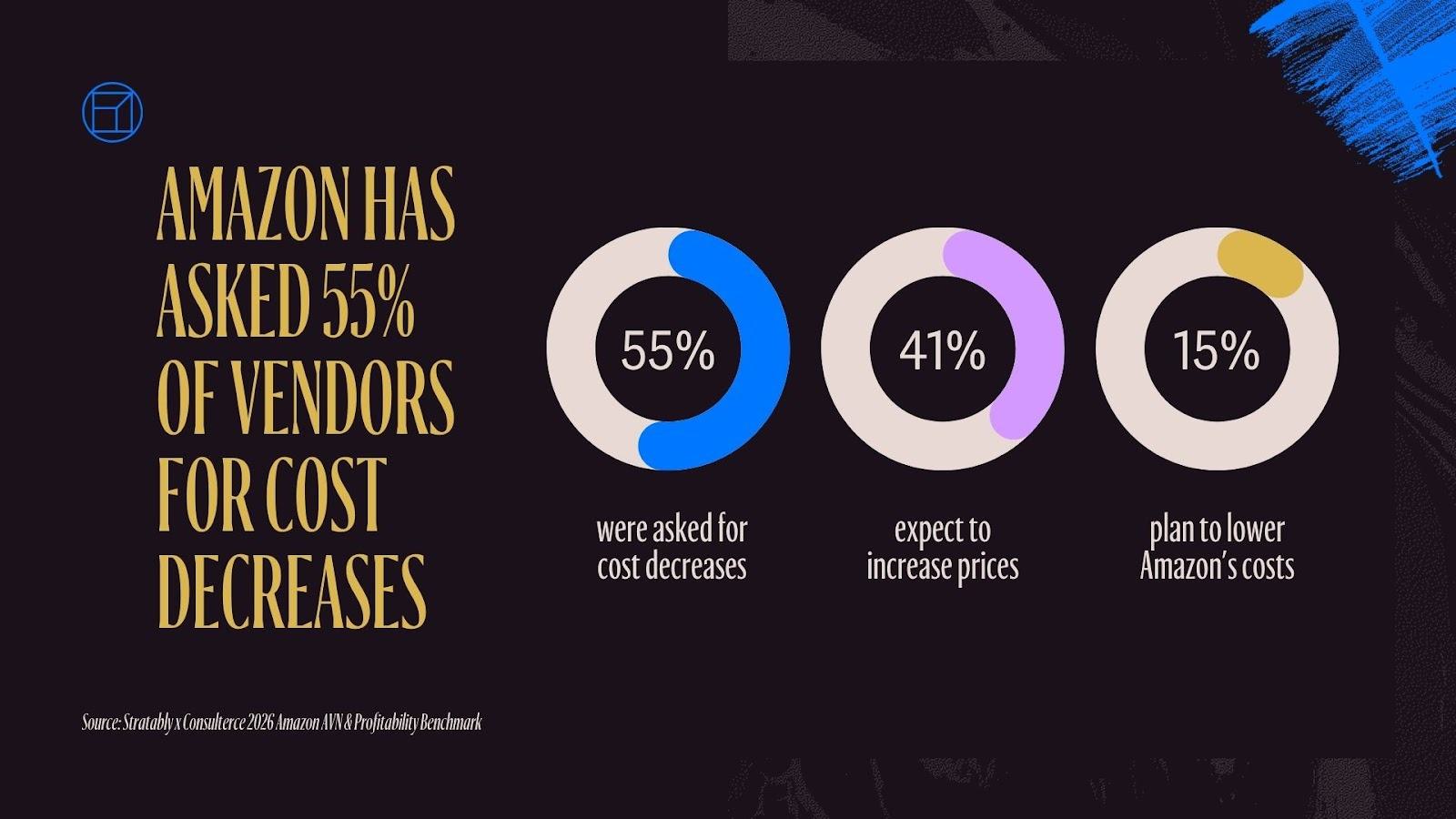
In 2026, many vendors continue to face cost price pressure as Amazon sharpens its focus on contribution margin. According to Stratably’s benchmarking of 262 1P vendors, 55% of brands received cost-decrease requests during AVNs, with most asks clustering in the mid single-digit percentage range. At the same time, a meaningful share of vendors actively defended or increased costs to offset inflation, logistics complexity, and compliance-driven expenses.
Trade Terms, Co-op, and Funding Requirements
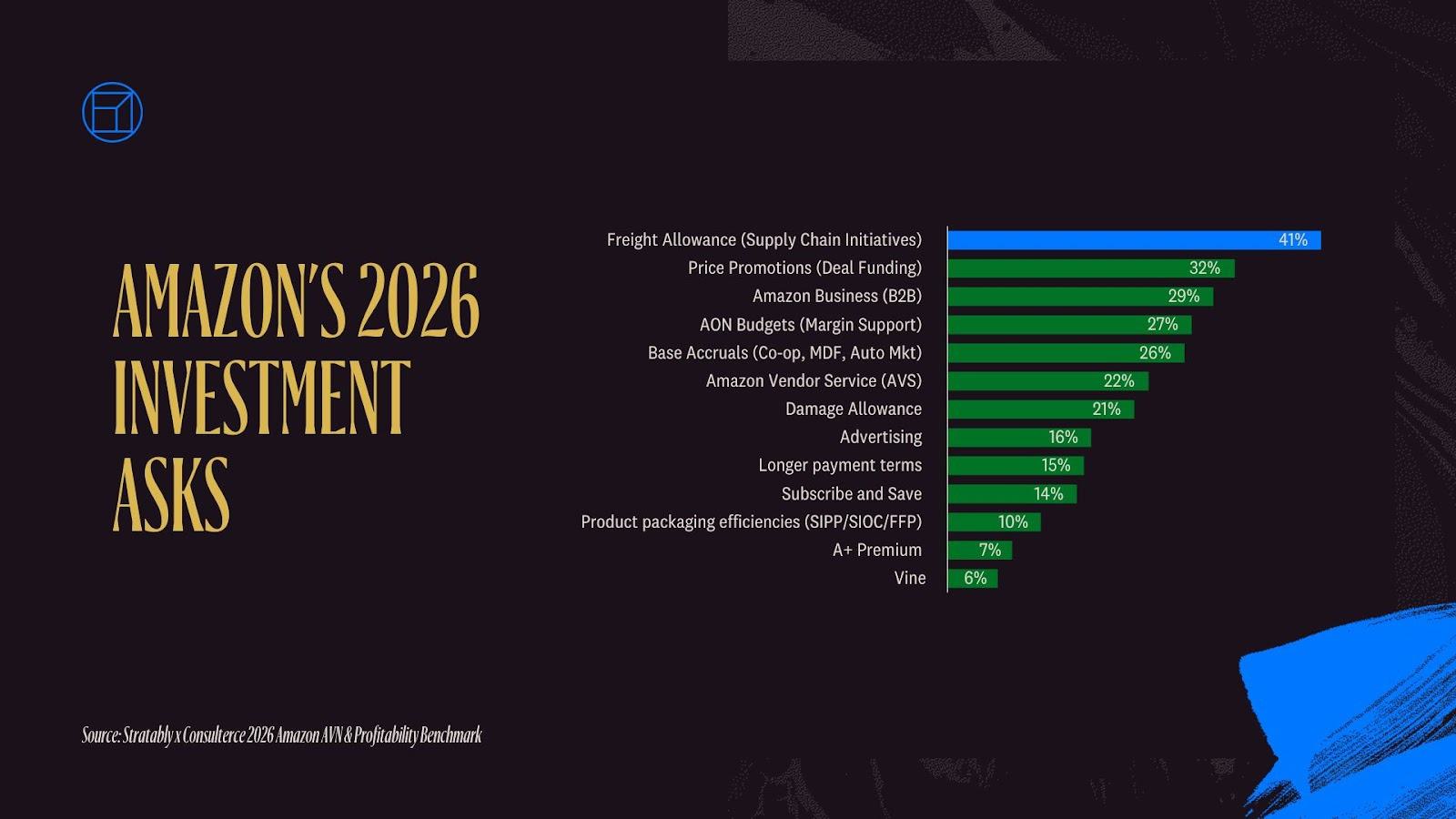
Beyond base cost, Amazon frequently seeks additional margin through trade terms and funding commitments. These requests can take several forms, including:
- Higher base accruals
- Expanded co-op
- Increased deal funding
- Participation in category-wide investment initiatives
In recent AVN cycles, base accruals and promotional funding have emerged as two of the most common levers Amazon uses to close margin gaps. Because these concessions are often layered together, their effect on net profitability can be difficult to assess without detailed modeling.
For vendors, the risk lies in evaluating each request in isolation. Trade terms that appear manageable on their own can significantly erode margin once combined with cost and operational adjustments.
Operational Performance Requirements
Operational performance plays a growing role in AVN outcomes. Amazon treats execution as a financial indicator, using reliability metrics to assess the true cost of doing business with a vendor. Key areas of focus include:
- In-stock rate
- Fill rate
- Lead time adherence
- Chargeback or shortage frequency
Stratably’s research shows that vendors with weaker operational scorecards were significantly more likely to face firmer commercial positions during AVN, including reduced flexibility on disputed terms. Strong operational performance, by contrast, supports a more balanced negotiation. It signals that a vendor can scale without increasing Amazon’s internal cost burden.
Program Participation and Commitments
Amazon may also link AVN outcomes to participation in specific programs or services. These can include:
- Subscribe and Save
- Amazon Vine
- Amazon Vendor Services
- Expanded promotional commitments tied to key retail moments
While these programs are often framed around growth and visibility, they introduce additional cost and operational complexity. Their value depends heavily on category dynamics, execution quality, and the vendor’s broader margin structure.
Evaluating program participation alongside pricing, funding, and operational terms helps ensure that AVN decisions support sustainable performance throughout the year.
How Amazon Evaluates 1P Vendors During AVN
During Amazon Vendor Negotiations, Amazon evaluates 1P vendors through a combination of retail readiness, profitability, and operational reliability. The 2026 findings show that only 59% of 1P vendors rate their net margin with Amazon as healthy or very healthy, underscoring why margin scrutiny has intensified during recent AVN cycles.
Retail Readiness and Catalog Health
Retail readiness is one of the first filters Amazon applies. Before cost or funding discussions even begin, Amazon assesses whether a vendor’s catalog is built to support efficient retail execution. This includes:
- Content completeness
- Accurate product data
- Compliant variation structures
- Adherence to Amazon’s catalog standards
Incomplete listings, inconsistent variations, or unresolved compliance issues increase friction for Amazon’s retail teams. When retail readiness is weak, negotiation conversations tend to shift quickly toward corrective actions rather than growth opportunities. Brands that enter Amazon 1P Vendor Negotiations with a clean, well-maintained catalog are better positioned to keep the focus on commercial strategy.
Profitability and Contribution Margin
Profitability remains a central lens in Amazon AVN evaluation. Amazon reviews contribution margin across individual ASINs, product families, and the overall account to determine where margin gaps exist.
In 2026, this scrutiny has intensified. Vendor benchmarking shows that margin health varies widely across 1P accounts, with a growing number of brands operating below internal benchmarks. As a result, Amazon applies more targeted pressure on underperforming SKUs rather than relying solely on broad cost or funding adjustments.
Revenue growth alone carries limited weight if it is not paired with a consistent contribution margin. Brands with uneven profitability profiles often face more detailed questioning and narrower paths to approval during AVN.
Operational Reliability Signals
Operational reliability acts as a forward-looking indicator in Amazon’s evaluation process. Forecast accuracy, lead time consistency, and historical scorecard performance help Amazon estimate the future cost of managing a vendor relationship.
Vendors with strong reliability signals are viewed as lower-risk partners. This perception can influence negotiation tone, escalation outcomes, and Amazon’s willingness to absorb short-term margin pressure.
When operational reliability is weak, commercial flexibility tends to narrow. In these cases, Amazon often seeks to offset execution risk through stricter terms or additional funding requirements.
What Amazon Vendor Negotiations Mean for Brands
Amazon Vendor Negotiations shape far more than annual contract terms. Negotiated terms directly influence how Amazon manages a brand’s assortment throughout the year. When AVN results align with Amazon’s margin and operational expectations, brands often see smoother replenishment, stronger retail execution, and fewer escalations.
When outcomes are strained, the impact tends to surface gradually. Brands may experience increased suppression risk, slower issue resolution, or reduced flexibility around forecasting and inventory decisions.
Stratably’s data suggests that vendors exiting AVN with a margin or operational misalignment are more likely to encounter downstream friction later in the year, including slower issue resolution and tighter replenishment oversight.
Common AVN Risks Brands Underestimate
One of the most common risks in AVN is margin erosion hidden across multiple concessions. Cost adjustments, accrual increases, and funding commitments often appear manageable when reviewed individually, yet their combined effect can reduce net profitability.
Another frequent risk is accepting terms without modeling long-term impact. AVN decisions influence margin and operational exposure for the entire year, and short-term approvals can limit future flexibility. Operational requirements also carry risk when treated as standard expectations rather than negotiable levers. Chargeback policies, lead time commitments, and service level thresholds all affect cost and execution capacity.
Brands that enter AVN without clear priorities often lose leverage early. Preparation, internal alignment, and scenario planning help prevent reactive concessions and support more durable outcomes.
Amazon Vendor Negotiation Challenges
AVNs impact brands differently depending on margin health, operational consistency, and experience with the 1P model. A timely and carefully planned Amazon vendor negotiation strategy helps teams prepare with clarity while accounting for these differences.
New to AVN
Brands entering AVN for the first time typically face a credibility challenge. Amazon relies on early margin signals, catalog quality, and operational reliability to set expectations. For such brands, preparation focuses on establishing a clear economic baseline, realistic service commitments, and retail readiness that supports scale.
Decreased Profitability
Those with declining profitability despite revenue growth often enter AVN under margin scrutiny. Amazon interprets this pattern as misalignment between growth and contribution. These vendors benefit from isolating margin erosion drivers and entering negotiations with a clear explanation of trade-offs and corrective paths.
Operational Penalties
Lastly, brands facing repeated operational penalties tend to encounter AVN conversations shaped by risk management. Chargebacks, shortages, and inconsistent fulfillment increase pressure on both commercial terms and execution requirements. Demonstrating recent operational improvements can help rebalance negotiations.
How to Prepare for Amazon Vendor Negotiations
Preparation for Amazon Vendor Negotiations typically begins months before the actual discussions. Most vendors start active planning in Q4, with some larger or more complex organizations beginning as early as Q3.
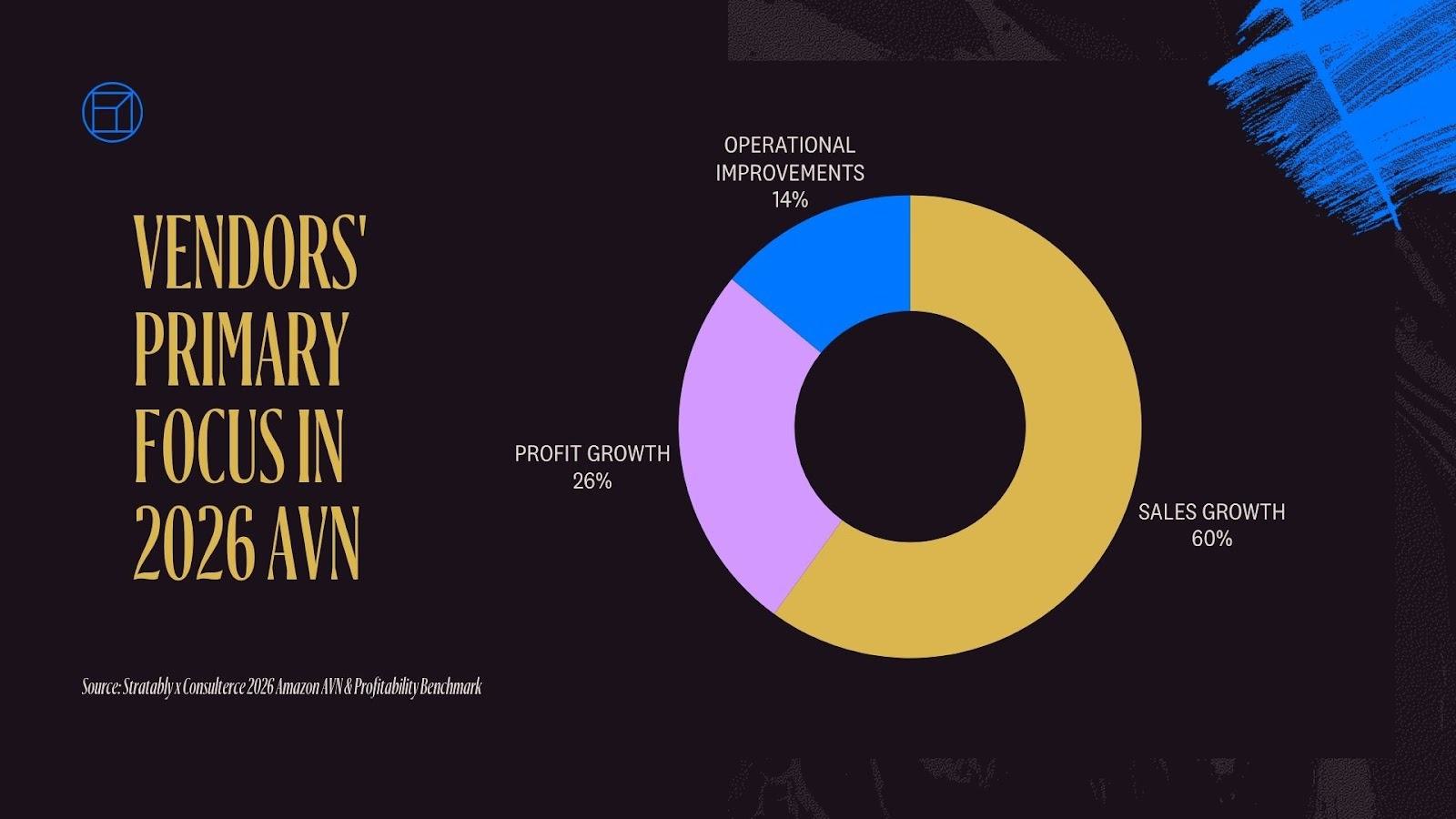
During this period, vendors assess profitability, operational health, and historical concessions to determine where pressure is most likely to emerge. Stratably benchmarking shows that while 60% of vendors prioritize sales growth during negotiations, only 26% focus primarily on profit improvement, and 14% prioritize operational performance, revealing a common gap between negotiation focus and long-term margin sustainability.
Financial & Margin Modeling Before AVN
Effective preparation starts with understanding how Amazon will frame the conversation. Retail teams enter AVN with a clear view of historical margin performance, operational scorecards, and catalog health. Vendors that review these same inputs ahead of time are better positioned to anticipate pressure points and structure informed responses.
Margin analysis is a critical early step. This includes reviewing contribution margin by ASIN, identifying where profitability gaps exist, and understanding which products drive disproportionate operational costs. The goal is not to optimize every SKU, but to clearly distinguish between strategic items, margin drivers, and products that may require structural changes.
Operational Cleanup & Scenario Planning
Operational readiness should be assessed in parallel. Forecast accuracy, lead times, and historical chargebacks all factor into Amazon's evaluation of future risk. Addressing known issues before AVN allows brands to enter negotiations with a clearer execution narrative rather than reacting to concerns raised by Amazon.
AVN preparation also involves scenario planning. Vendors benefit from outlining multiple negotiation paths based on varying levels of concession or investment. This approach helps teams make faster, more consistent decisions during AVN discussions and reduces the likelihood of reactive commitments that create downstream pressure during the year.
Final Takeaway
Amazon Vendor Negotiations are a strategic control point for 1P brands. They influence not just pricing and funding, but operational alignment, margin sustainability, and long-term scalability. Success in AVN depends on preparation, internal alignment, and a clear understanding of which levers protect profitability versus which concessions introduce downstream risk.
Brands that approach AVN as a disciplined, data-driven process can reduce friction and position themselves for consistent performance throughout the year. This includes integrating financial modeling, operational readiness, and scenario planning. Thoughtful AVN preparation is crucial to transforming negotiations into a structured path for sustainable growth on Amazon.
Anja Pendic
Anja Pendic is the Content Marketing Specialist at Blue Wheel, where she plays a key role in creating and managing content for the company’s website. With extensive experience in digital marketing, copywriting, and social media management, she crafts engaging blogs, case studies, and landing pages. Anja has worked across various platforms, including Amazon, Meta, and TikTok, delivering impactful content and strategies.