
From Pause to Launch in Weeks
In late 2025, the digital marketing world reacted to reports of OpenAI's apparent deprioritization of ChatGPT advertising and shopping features. Internal shifts driven by competitive pressure from Google's Gemini advancements and “code red” language from OpenAI led many to believe that paid conversational placements in ChatGPT were off the table for 2026. This forced brands to pivot toward platform-agnostic strategies like GEO (Generative Engine Optimization) and AXO (Assistant Experience Optimization).
Fast-forward to January, when OpenAI published "Our approach to advertising and expanding access to ChatGPT". The company confirmed plans to begin testing ads in the coming weeks for US users on the Free tier and a new low-cost ChatGPT Go subscription ($8/month).
This marks a clear reversal from the earlier pause, as OpenAI moves to diversify revenue, fund broader AI accessibility, and support massive infrastructure investments. The shift isn't just about monetization. It's positioned as mission-aligned, making powerful AI available to more people with fewer barriers.
Why eCommerce and Marketing Teams Should Care Now
What looked like an indefinite delay has become an imminent opportunity (and potential disruption):
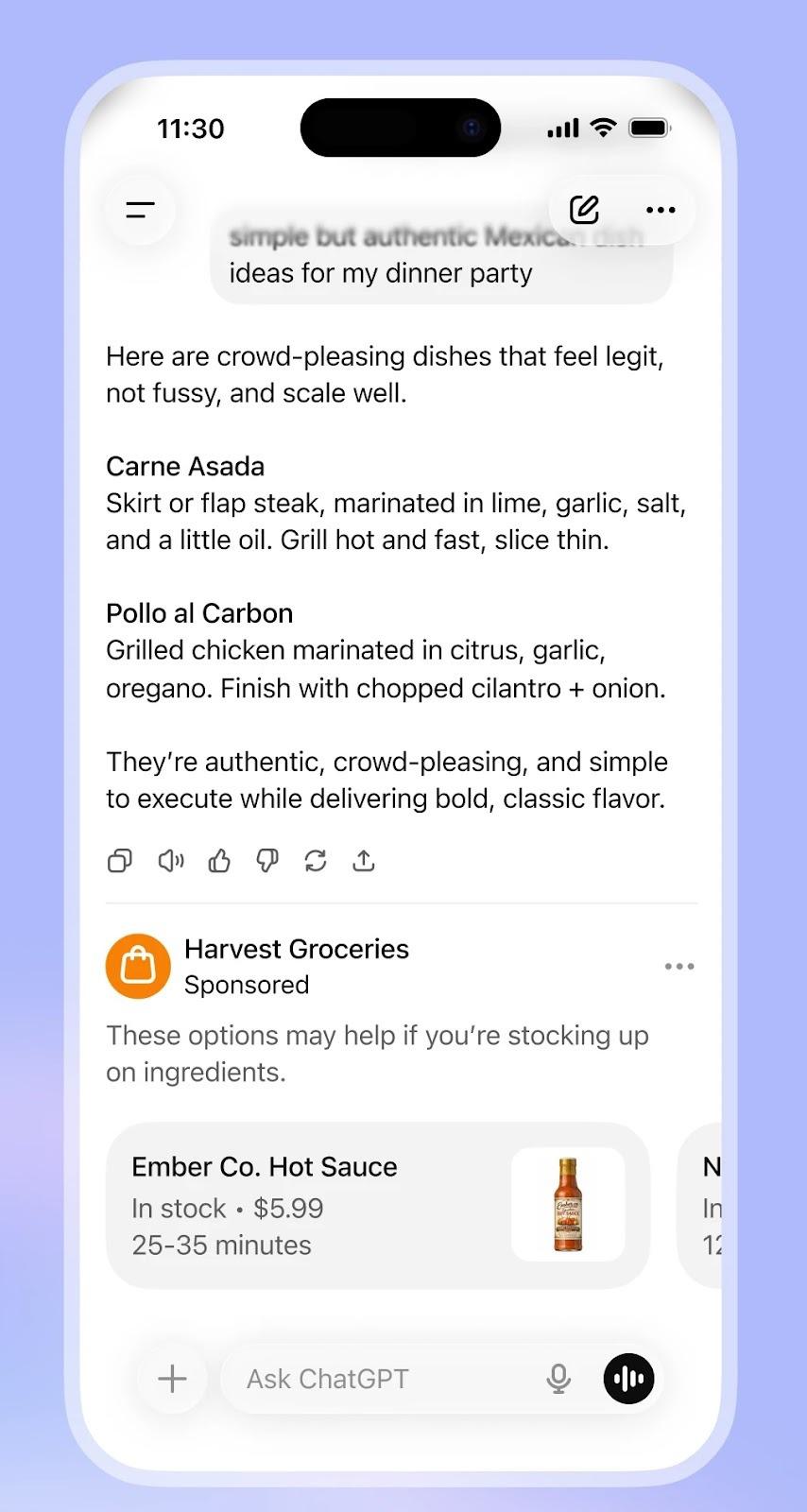
- Testing starts soon. Ads will appear as clearly labeled sponsored content at the bottom of relevant responses, tailored to the conversation's intent.
- Free and Go tiers targeted. Higher Pro, Business, and Enterprise plans remain ad-free, preserving premium experiences.
- Revenue fuels accessibility. Ad proceeds help reduce usage limits or eliminate paywalls for more users, expanding the overall audience pool.
- Commerce potential unlocked. Early formats focus on relevant product/service recommendations, with hints of future conversational shopping (e.g., direct questions about purchases or "instant checkout" integrations).
This development closes the "upper-funnel reach gap" that brands feared in late 2025. It introduces new dynamics to conversational interfaces with intent-based ads, where relevance and trust are paramount.

OpenAI's Advertising Principles
OpenAI has outlined clear guidelines to protect the user experience that made ChatGPT a daily tool:
- Answer independence: OpenAI has explicitly said that ads won’t alter or influence the factual, algorithmic output of ChatGPT’s answers. Ads are intended to appear separately and not change how the AI generates its answers.
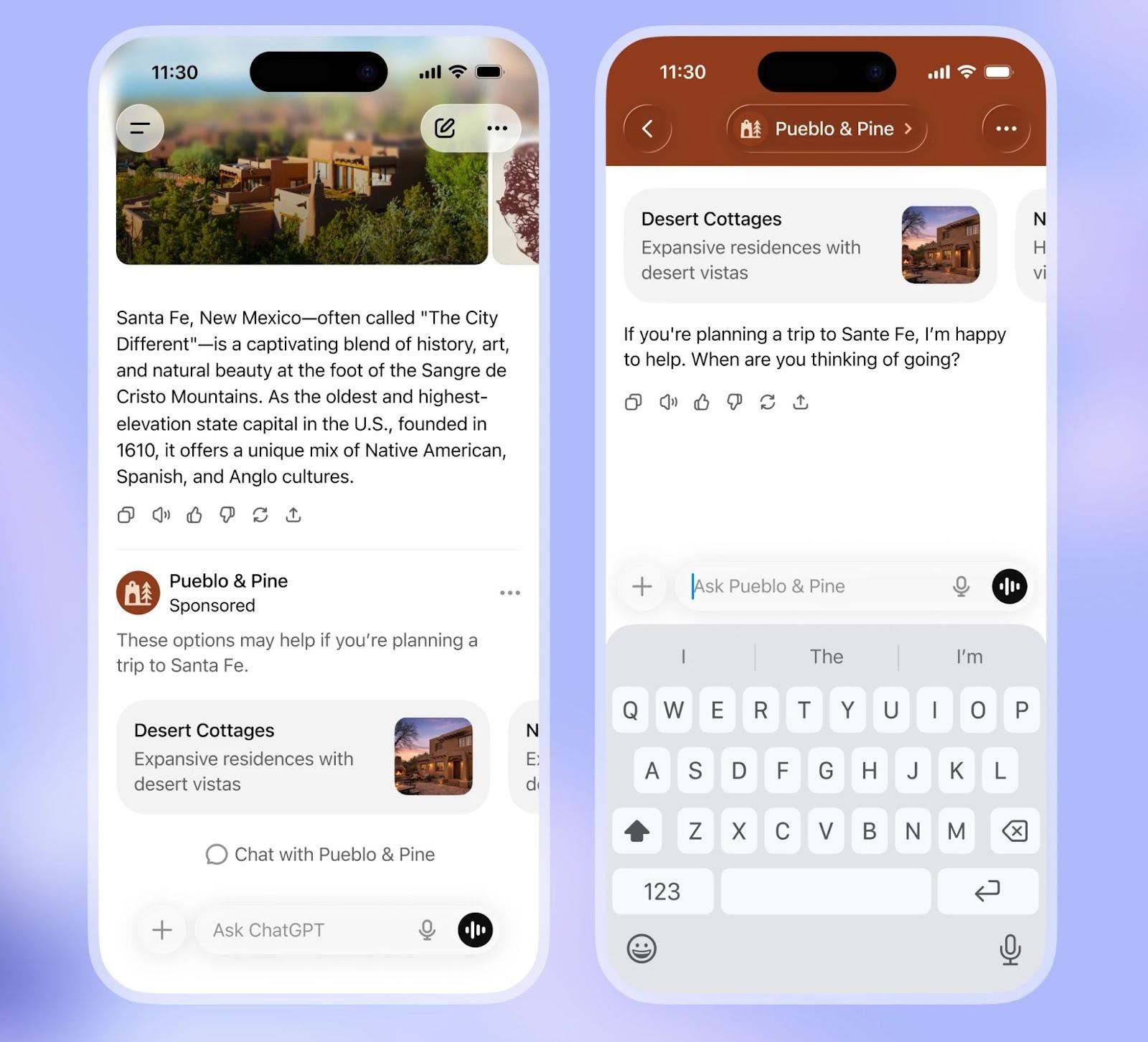
- Clear labeling and separation: Reporting indicates that if/when ads appear, they’ll be shown in distinctly labeled areas (e.g., below the chatbot’s answer), not blended into the actual response text itself.
- Conversation privacy: OpenAI has said it won’t sell user data to advertisers or share personal chats directly with advertisers for targeting.
- User control: OpenAI says users can control how their data is used for ads and clear it, though exact controls and mechanics are still evolving.
- Exclusions: OpenAI has noted that ads should not appear in chats about sensitive or regulated topics. In OpenAI’s current plan, ads are targeted at Free tier and ChatGPT Go users; paid tiers are ad-free. OpenAI reportedly plans not to show ads to minors (based on self-reported age or age-prediction models).
- Long-term focus: OpenAI will learn from user feedback and refine ad placements over time while staying dedicated to prioritizing users and preserving trust.
These commitments aim to avoid the pitfalls that have plagued traditional search ads, positioning ChatGPT ads as more "helpful discovery" than interruption.
GEO/AXO Still Essential; Now With a Paid Layer
Even with ads arriving, the fundamentals haven't changed:
- Organic remains king for upper-funnel authority. Brands must continue investing in GEO (structured data, canonical answers, etc.) to appear as trusted sources in AI responses across all assistants (ChatGPT, Gemini, Claude, and others).
- AXO drives conversions. Agent-native creative (comparison tables, voice-friendly scripts, zero-click flows) turns organic visibility into purchases, regardless of ad presence.
Now, however, paid ChatGPT ads offer a complementary channel:
- Test intent-matched sponsored recommendations for high-relevance products.
- Use ads to amplify organic GEO signals (e.g., drive traffic to brand-backed answers).
- Prepare reusable creative kits for both organic and sponsored conversational formats.
Immediate Recommendations: What Brands Should Do in Q1
1. Monitor OpenAI’s test in the US closely. Sign up for updates and prepare to participate early when access expands.
2. Reallocate paused budgets. Shift previously earmarked "OpenAI conversational" funds into testing ChatGPT ads alongside Gemini (already shipping) and emerging platforms.
3. Audit for intent readiness. Ensure product feeds, APIs, and structured data are optimized for conversational relevance; ads will favor high-quality, intent-aligned signals.
4. Build hybrid creative. Develop formats that perform in organic responses and sponsored placements (e.g., clean product cards, direct-benefit copy).
5. Double down on a multi-assistant strategy. Don't go all-in on ChatGPT ads; maintain tests on Gemini Ads, Claude Projects, and Perplexity for resilience.
How This Will Move the Market (Updated 2026 Outlook)
- Faster path to conversational commerce. Brands can now plan yearly budgets with ChatGPT paid as a real possibility.
- Increased competition. Expect CPM pressure as more players (including Google) push AI-native ads.
- Trust as the new moat. Winners will be those who deliver genuinely helpful, non-intrusive experiences for both organic and paid.
- Acceleration of agent-to-agent commerce. With ads funding broader access, expect more integrations expanding beyond the real, emerging partnerships and capabilities like Shopify + ChatGPT, Walmart partnerships, and zero-click opportunities.
What a Brand Should Do Next (Practical Checklist)
- Review OpenAI's announcement and principles.
- Download our latest GEO Readiness Checklist.
- Schedule a briefing to assess ChatGPT ad readiness (testing expected soon).
- Launch or expand Gemini conversational campaigns immediately.
- Build your "agent creative kit" for cross-platform use.
- Book a 30-minute strategy session to pivot your 2026 AI commerce plan.
The OpenAI train is back on track, and it's leaving sooner than expected. Brands that act fast on both organic GEO/AXO foundations and this emerging paid channel will capture the next wave of conversational demand.
Make sure your brand is on board. Contact Blue Wheel today to update your AI commerce strategy.
Lisa Wendland
Lisa Wendland, MBA, is Senior Director of Owned Media at Blue Wheel, an Inc. 5000 omni-channel agency. She leads owned media teams in SEO, Organic Social, Community Management, and Lifecycle (Email/SMS), using AI to enhance efficiency in strategy, ads, and personalization for retail brands. Her data-driven vision drives engagement and retention, supporting over $2B in client ad spend across Amazon, Walmart, and D2C. Collaborating across paid and earned media, Lisa boosts conversions and loyalty, shaping retail marketing innovation.