
Amazon is transforming its shopping and advertising ecosystem with AI-powered discovery, conversational search, automated creative generation, and machine learning–driven media optimization.
These changes are shifting product visibility from keyword matching to intent interpretation, while unifying content, advertising, and measurement into a more integrated system.
For brands, this evolution connects PDP clarity, shopper sentiment, and media performance more tightly than ever. In 2026, eCommerce teams that align content structure and advertising strategy with how Amazon’s AI evaluates relevance will gain efficiency, visibility, and long-term growth advantages.
Amazon Is Evolving into an AI-Assisted Shopping Ecosystem
Amazon is no longer operating purely as a search-driven marketplace. It is evolving into an AI-assisted shopping environment. Amazon’s continued AI investment trajectory and the broader macro trend suggest that more shopping journeys will start with AI agents and LLM platforms, which then condition shoppers to bring conversational behavior to Amazon as well.
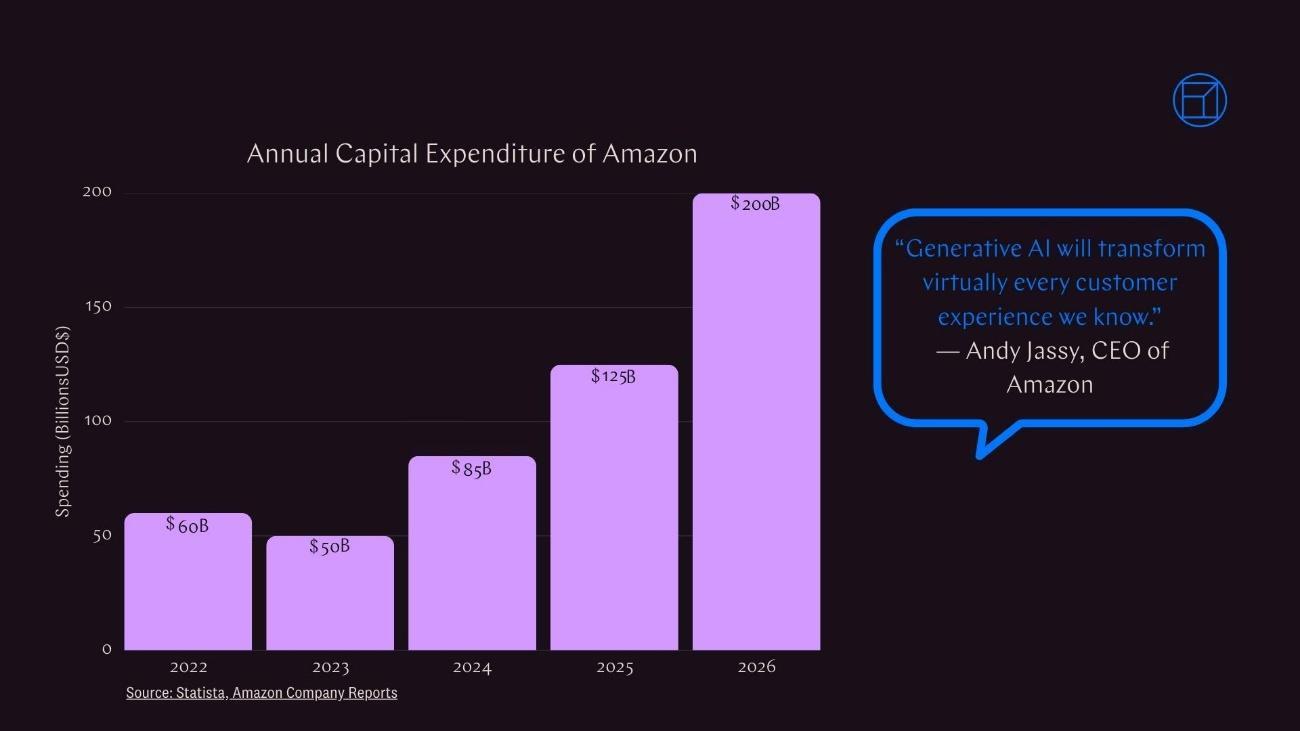
On the shopper side, conversational tools like Amazon Rufus allow customers to ask nuanced questions and receive curated, contextual recommendations. On the advertising side, AI-driven automation is optimizing targeting, bidding, creative generation, and measurement at scale. And on the measurement side, enhanced analytics and machine learning are improving visibility into incrementality and full-funnel performance.
These are not isolated updates, but they represent a structural shift in how discovery, media, and conversion now work together.
AI Is Connecting Discovery, Media, and Measurement
Across PDP updates and advertising automation, three unifying pillars emerge:
Intent-Based Discovery
Amazon is evaluating relevance using shopper behavior, context, and semantic understanding instead of relying solely on keywords.
AI-Assisted Media Execution
Automation tools improve targeting precision, creative testing, and budget allocation in real time.
Unified Performance Signals
Content quality, reviews, and engagement now influence both discoverability and media efficiency. And the result is a more interconnected ecosystem where content and advertising performance reinforce one another.
How AI Is Reshaping Product Discovery from Keywords to Intent
With the introduction of conversational shopping tools, shoppers are asking full questions rather than typing fragmented search terms. Instead of matching keywords alone, Amazon evaluates:
- Intent and contextual signals
- Structured product attributes
- PDP clarity and completeness
- Customer reviews and sentiment
- Historical behavioral data
Discovery is becoming semantic, not just syntactic.
How Amazon Interprets Shopper Questions and Matches Products
When a shopper submits a conversational query, Amazon’s AI systems:
- Interpret the underlying use case
- Map it to structured product attributes
- Evaluate content clarity
- Analyze review language
- Surface products that best satisfy the intent
This process reduces reliance on rigid keyword matching and increases emphasis on contextual fit.
PDP Clarity Determines AI Visibility
Visibility now depends on clarity and completeness.
Brands must ensure PDPs clearly communicate:
- Product use cases
- Differentiating benefits
- Compatibility details
- Answers to common shopper questions
- Structured attributes aligned to real-world intent
Weak or vague PDP content reduces inclusion in AI-generated recommendations. Strong, structured content increases eligibility.

Transforming Amazon Advertising With AI-Driven Media Optimization
Amazon Ads is increasingly powered by machine learning that improves:
- Audience expansion
- Bid optimization
- New-to-brand targeting
- Creative variation testing
- Cross-channel measurement
Automation is compressing optimization cycles and improving efficiency.
How AI Uses Behavioral Signals to Improve Targeting and Bidding
AI evaluates campaign performance signals such as:
- Shopper purchase history
- Browsing behavior
- Contextual placement signals
- Conversion probability modeling
- Incrementality and attribution data
These signals allow campaigns to dynamically adjust targeting and bidding strategies to reach shoppers when they are most likely to convert.
Why Media Efficiency Now Depends on Data Quality and PDP Signals
Media efficiency now depends on data quality and content clarity.
When PDPs clearly communicate product value and use cases, AI:
- Improves targeting precision
- Reduces wasted spend
- Increases acquisition efficiency
- Expands into high-intent audiences
Advertising and content are no longer separate workstreams. They are interconnected performance drivers.
When AI-driven targeting is paired with strong shopper signals, brands are already seeing measurable gains in engagement and efficiency.
How AI Automation Is Improving Campaign Performance
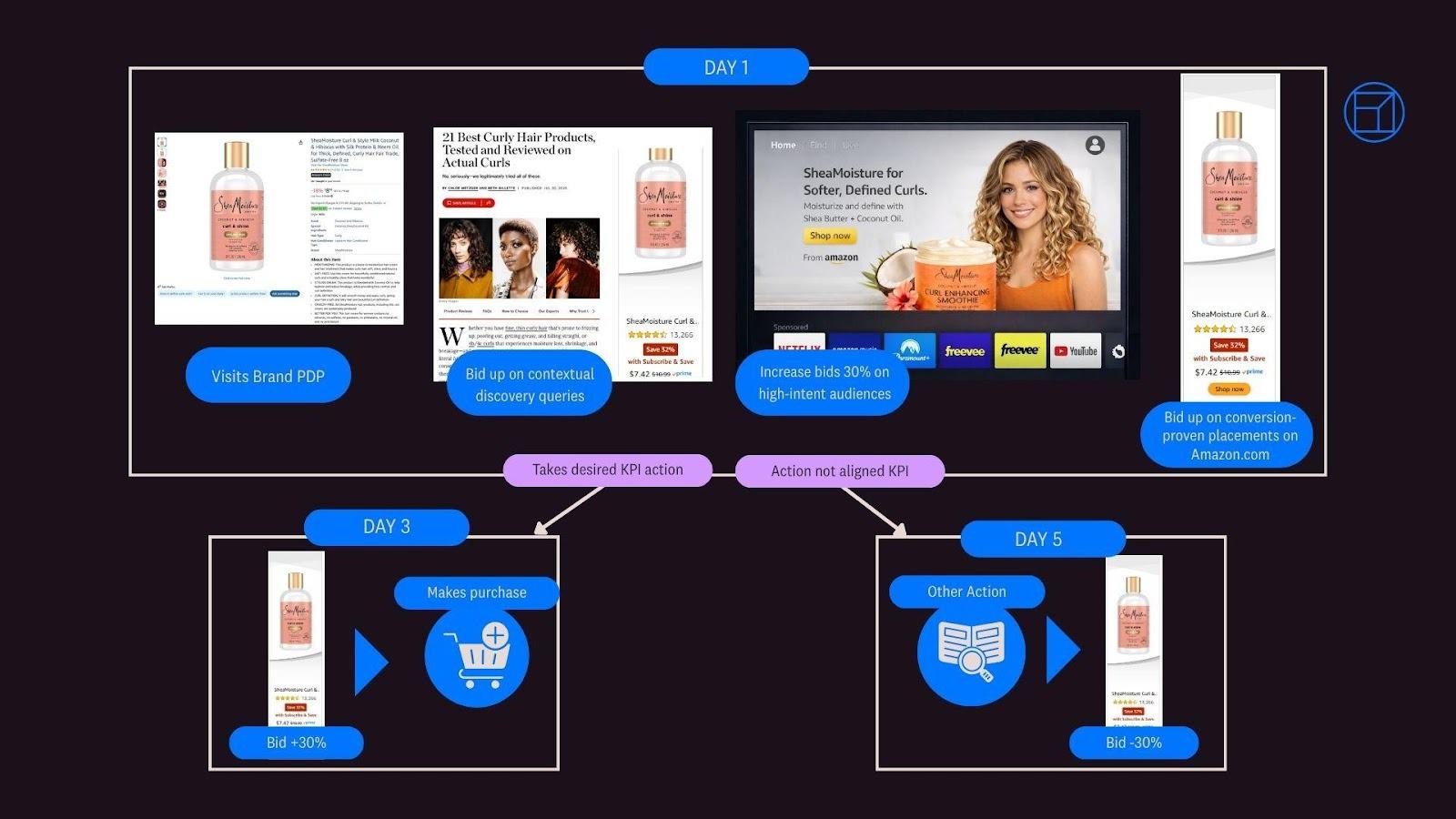
AI-powered campaign automation is becoming more impactful as Amazon’s shopper signals grow richer and more precise. Solutions like Performance+ and Brand+ move beyond rigid audience definitions and manual bid adjustments, dynamically optimizing delivery based on real-time user behavior and likelihood to meet campaign goals.
Instead of relying on static targeting rules, these campaigns use behavioral signals and recency data to identify when a shopper is most likely to engage and convert.
What This Looks Like in Practice
As shoppers browse products, visit Brand Stores, stream content, and interact across Amazon properties, they generate behavioral signals that inform targeting decisions. AI-driven campaigns use these signals to adjust bids and placements in real time, helping brands reach shoppers when intent is highest.
This approach shifts media from broad exposure toward precision timing and relevance.
Amazon DSP Performance+ Test Results
In a recent controlled test, an AI-optimized Performance+ campaign delivered measurable improvements compared to existing DSP campaigns:
- 620% increase in click-through rate
- 134% increase in detail page views
- Lower cost per click during the test period
Because the test ran against long-standing campaigns, it limited major variables and highlighted how real-time bid adjustments and intent-driven targeting can improve efficiency and engagement.
The takeaway? AI automation becomes significantly more effective when paired with clear PDP messaging and strong shopper intent signals.

Connecting the Dots: PDP & Amazon Ads
Connecting your PDP content and advertising efforts is the critical strategic connection.
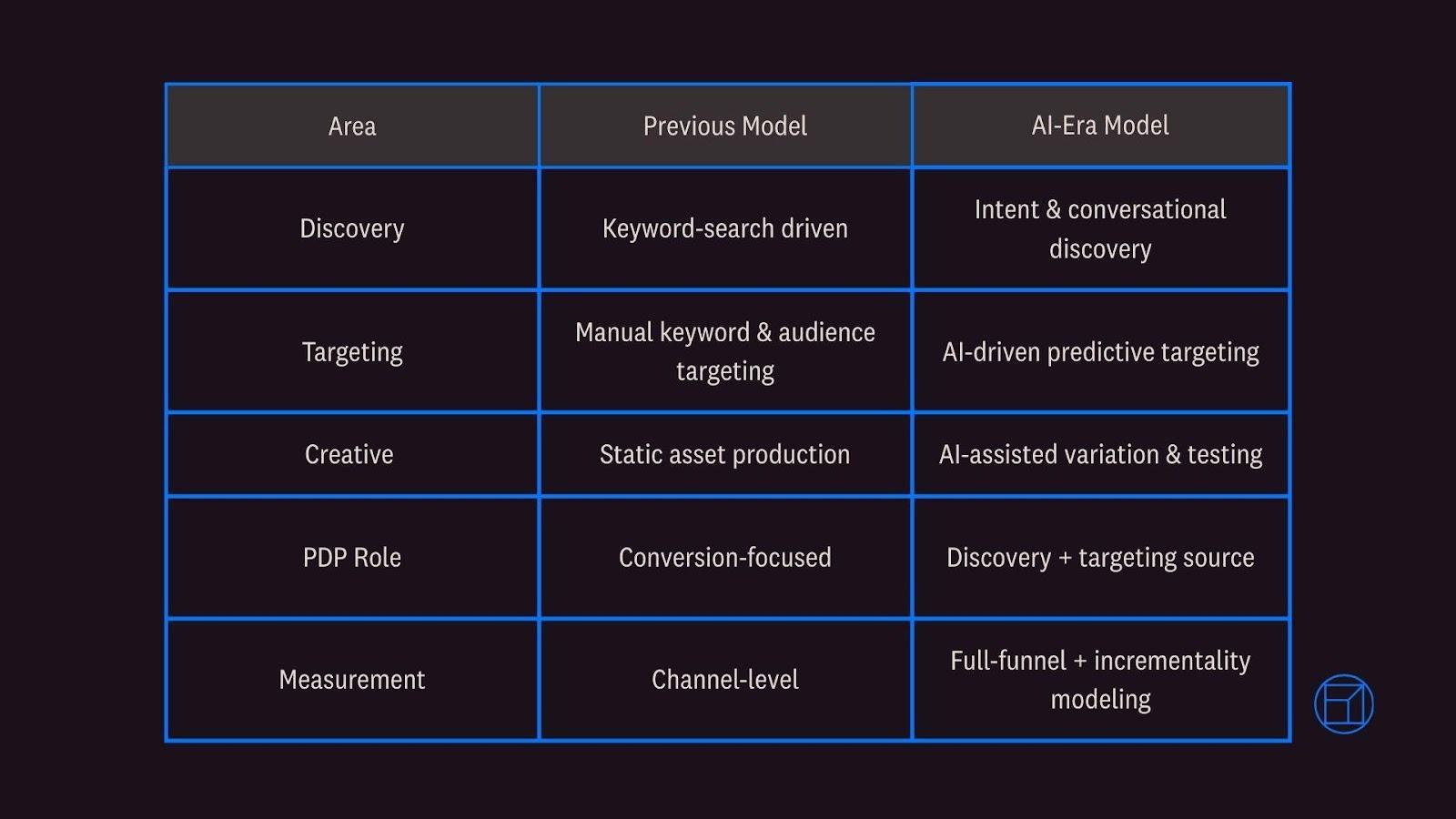
Historically:
- PDP optimization focused on conversion.
- Advertising focused on traffic and targeting.
In the AI era:
- PDP content influences discovery eligibility.
- PDP structure improves targeting precision.
- Review sentiment impacts relevance scoring.
- Conversion signals feed optimization models.
This creates a performance flywheel, and brands that align PDP and media strategies will outperform.
Better content → Better AI interpretation → Better targeting → Higher conversion → Stronger optimization signals → Greater visibility.
How the Amazon Growth Model Is Evolving
With Amazon’s growth model shifting from a channel-driven system to an AI-informed ecosystem, performance is shaped by how clearly Amazon can understand a product, how confidently it can recommend it, and how effectively media investments reinforce shopper intent.
What This Means for Growth and Efficiency
As Amazon’s AI reshapes discovery and media execution, the impact extends beyond tactics. These changes influence how efficiently brands acquire customers, how effectively media budgets perform, and how clearly performance can be measured across the funnel.
For brands that adapt early, the shift presents meaningful opportunities:
- Improved targeting precision
- More efficient media spend
- Increased new-to-brand acquisition
- Greater visibility in AI-driven discovery
- Stronger full-funnel performance insights
Where Brands Can Misstep
While AI introduces powerful efficiencies, it also exposes weaknesses in content clarity, data quality, and strategic alignment. Automation amplifies strong inputs, but it can also scale ineffective messaging or inefficient media strategies if guardrails are not in place.
Brands should be mindful of:
- AI amplifies unclear PDP messaging
- Poorly structured data limits discoverability
- Automation without oversight can reduce strategic control
- Teams must align content, creative, and media
- Measurement literacy is becoming mandatory
Final Takeaway
Amazon’s AI evolution is not a feature update. It is a structural shift toward intent-driven discovery, automated media execution, and unified measurement.
The brands that will win in 2026 are not those chasing isolated tactics, but those building integrated systems where PDP clarity, advertising strategy, and performance data reinforce each other. Clean inputs, structured content, strategic automation, and disciplined measurement will define competitive advantage in the evolving AI-driven Amazon ecosystem.

Lauren Palmisano
Lauren Palmisano is the Marketing Manager at Blue Wheel, where she manages all aspects of the company’s content marketing strategy. From overseeing the content calendar to managing blog and case study creation, website maintenance, and running Blue Wheel’s LinkedIn page, Lauren plays a pivotal role in driving the brand’s digital presence. With a career that started in eCommerce event management before transitioning into eCommerce marketing, Lauren brings a well-rounded approach to delivering impactful content and experiences that resonates with audiences.