
Amazon Rufus is an AI-powered shopping assistant available in the Amazon Shopping app and on the website, and it’s transforming how people search, discover, and buy. It answers questions, compares options, and makes recommendations in real time by pulling from product listings, reviews, community Q&A, and information from across the web.
For brands, this shift matters because Amazon Rufus changes how they earn visibility and conversion on Amazon. You’re no longer competing only in keyword rankings or product grids. Your PDP content now needs to be clear, complete, and easy for AI to interpret, all while being written for humans.
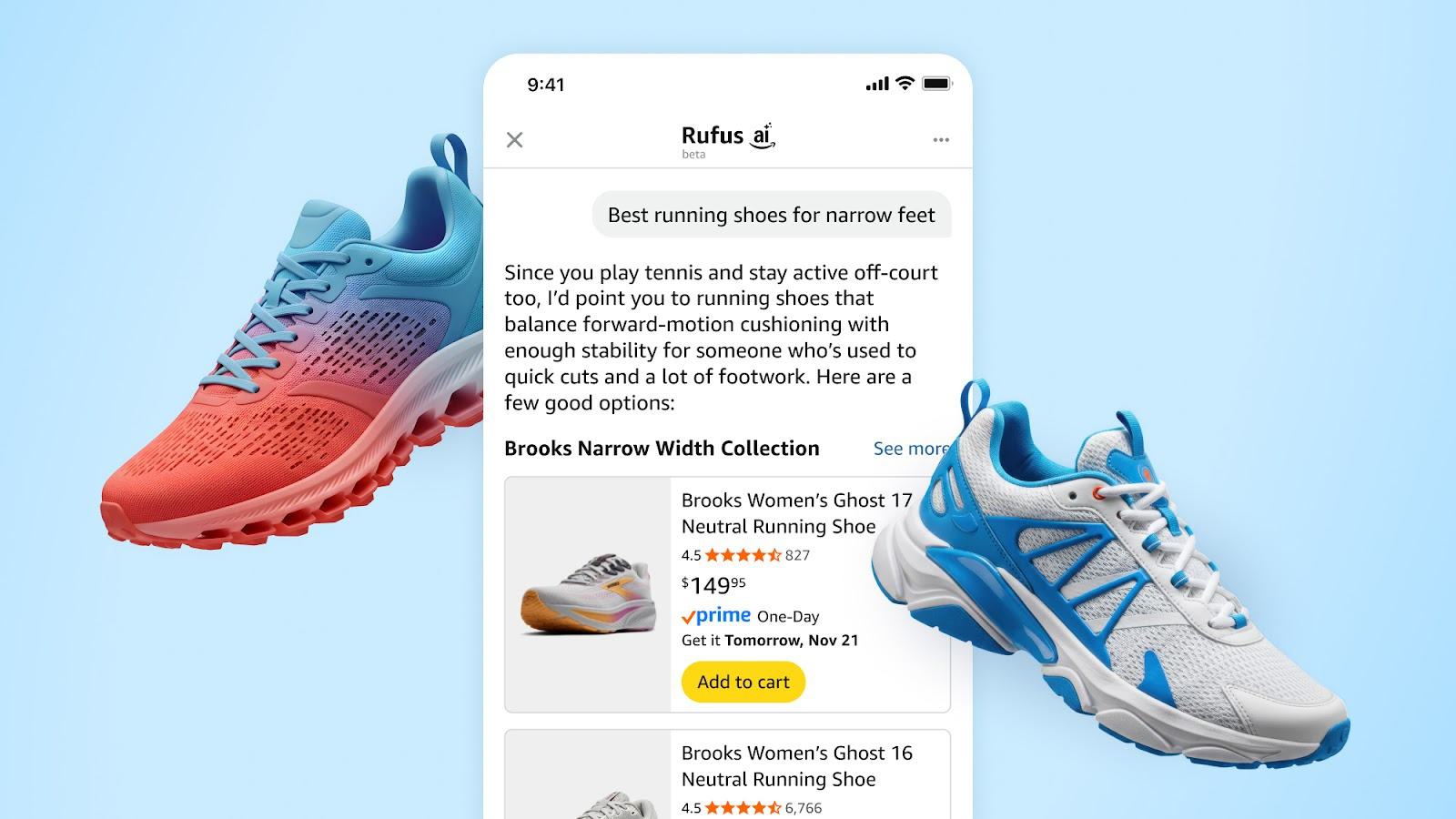
Why Amazon Rufus AI Matters for Brands Right Now
Rufus represents a structural shift in eCommerce. Amazon search is shifting from keywords to conversational, intent-driven discovery, where natural-language queries dominate. Last year, Amazon Rufus AI assisted over 250 million customers with immediate decision guidance by synthesizing product details, reviews, and Q&A.
For brands, this changes how discovery and conversion happen. Product clarity, structured information, and trust signals now influence how AI presents and recommends products. And there are already signs that AI-assisted interactions are shaping decisions earlier in the shopping journey, sometimes before customers ever click to a product page.
We’ve seen moments like this before with mobile commerce, sponsored ads, and Amazon DSP impacting how brands compete on the platform. Rufus represents a similar inflection point. If you adapt early, you’re better positioned to earn visibility, trust, and performance as AI becomes part of the shopping flow.
While Rufus doesn’t replace the traditional search on Amazon, it creates a new layer of product discovery that brands need to understand.
What Is Amazon Rufus AI?
Amazon Rufus is an AI-powered shopping experience designed to help customers find products, compare options, get answers, and make purchase decisions through natural, conversational interactions. According to Amazon data, customers who use Rufus during their shopping journey are 60% more likely to purchase compared to those who don't. You will see Rufus across search, product detail pages, and the broader app experience.
Amazon Rufus AI generates responses using multiple sources. It pulls from product catalogs, customer reviews, community Q&A, and additional web information. It also leverages Amazon’s internal knowledge graph to connect information across products and categories. Since it has access to customers’ account memory, it can provide personalized experiences based on their preferences and shopping patterns.
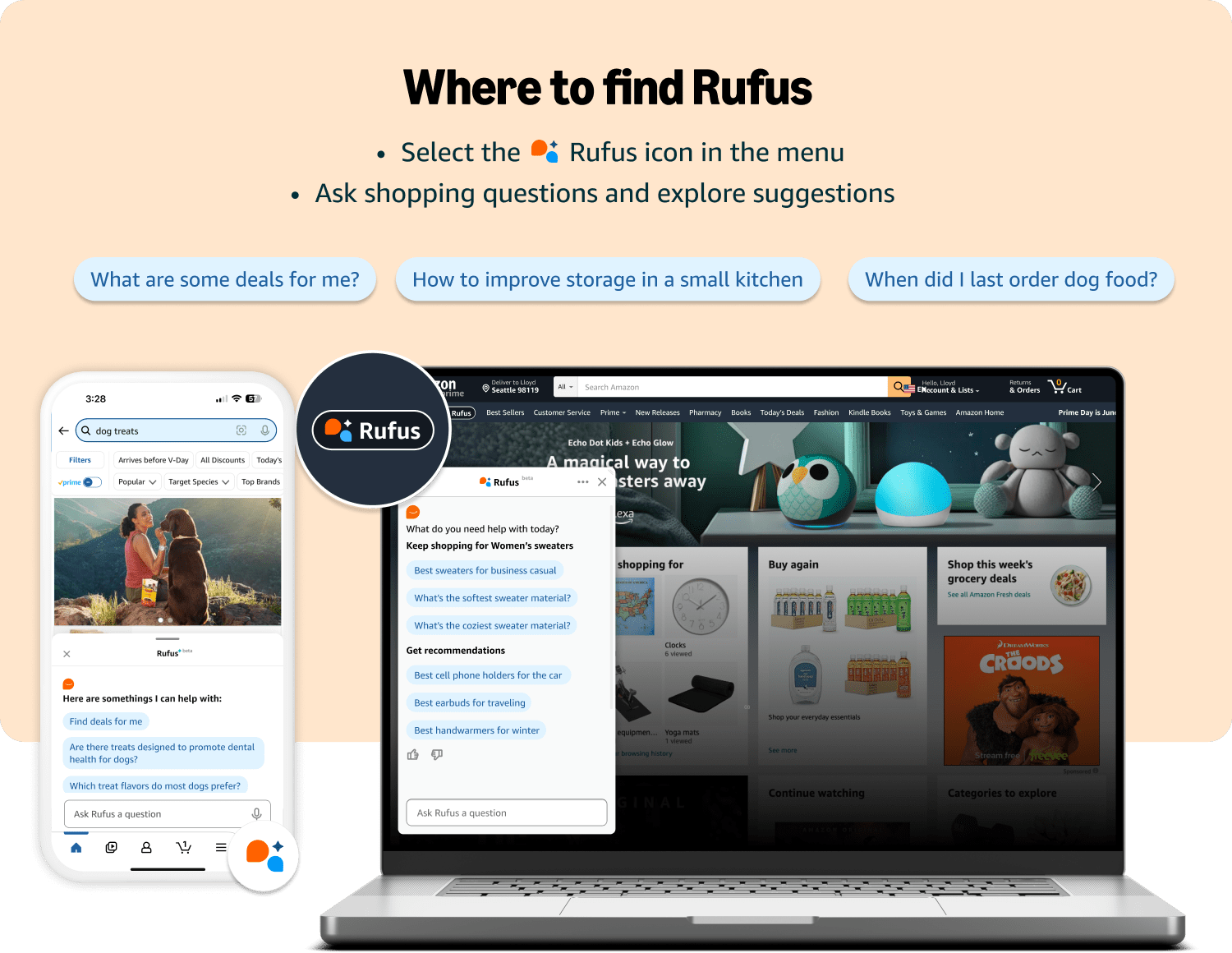
From an Amazon customer perspective, Rufus supports a wide range of behaviors. It can summarize product differences, highlight benefits, and guide customers toward options that fit their needs. It answers detailed questions and broader use-case queries, reducing friction and speeding up decision-making.
If you are an eCommerce brand, this means your content quality, including product images, titles, bullet points, descriptions, and A+ content, matters more than ever. Since Amazon Rufus rewards clarity, completeness, and consistency, products that are well described and supported by reviews and Q&A are easier for AI to understand and recommend.
Amazon Rufus Changes Product Discovery
While the Amazon search bar and keyword use won’t disappear, Rufus AI chatbot now makes product discovery conversational. Instead of typing keywords and refining filters, customers ask questions and explore options through dialogue.
For example, customers may get informed by asking Rufus questions like:
- “What should I look for in a daily moisturizer for sensitive skin?”
- “Are trail running shoes different from hiking shoes?”
They can compare and narrow down options by questioning:
- “What’s the difference between these two air fryers?”
- “Which option lasts longer based on reviews?”
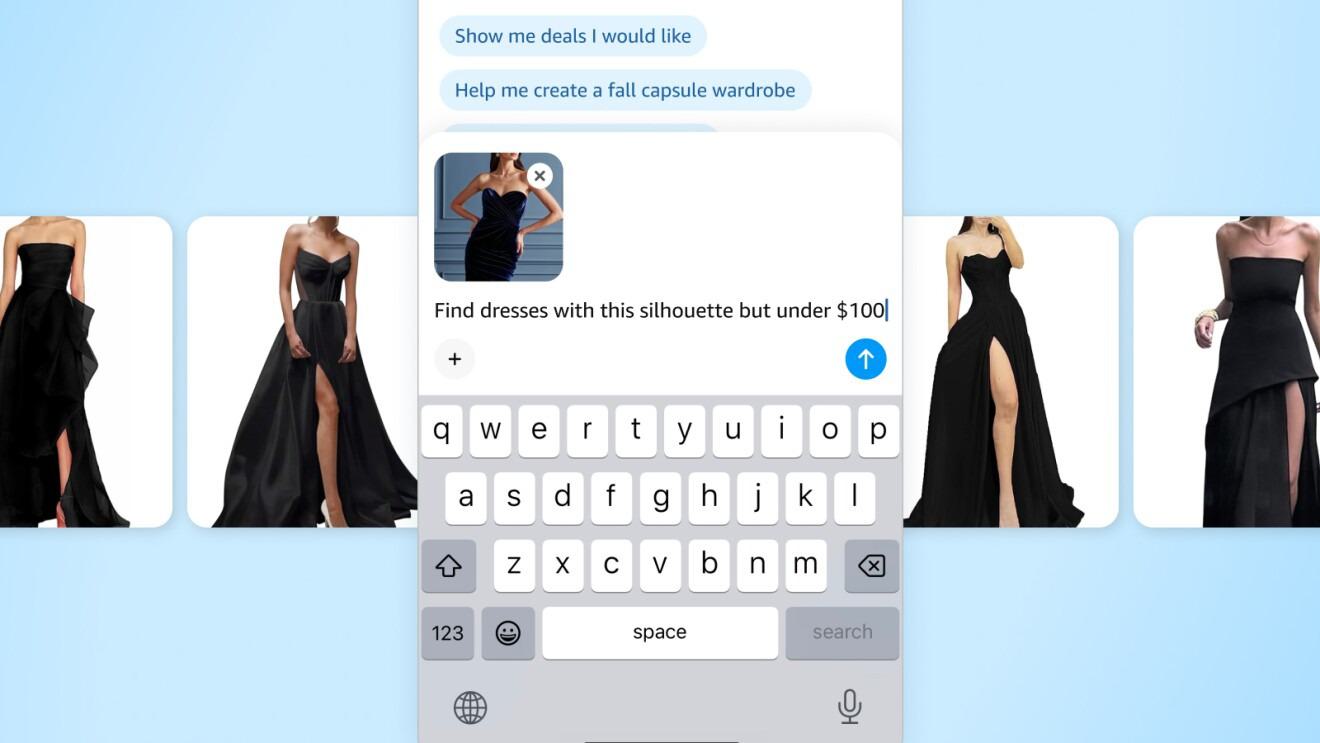
Rufus allows shoppers to view price comparisons and historical price graphs, offering a lookback window of 30 or 90 days. For example, customers may ask:
- “Is this the best deal right now?”
- “Has this gone on sale before?”
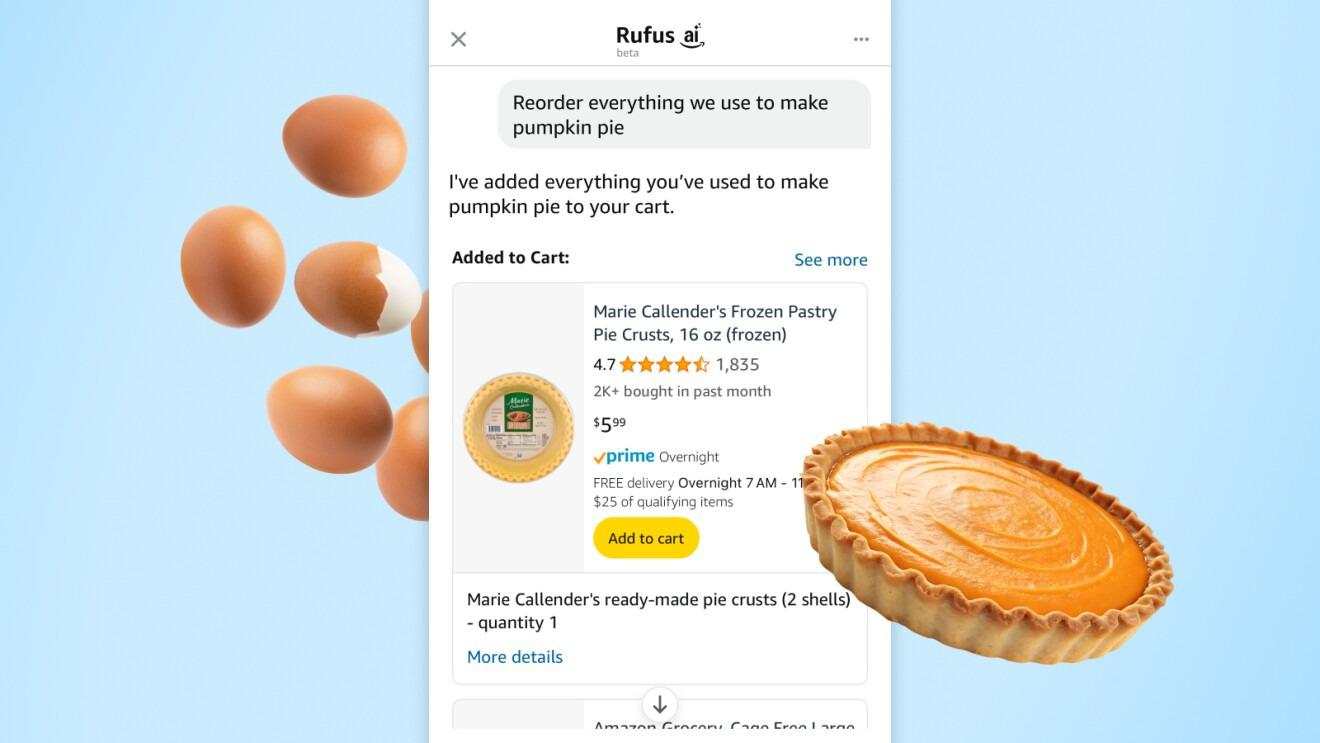
Shoppers can also use Amazon Rufus to reorder products by saying:
- “Get the same vitamins I usually buy.”
- “Order the dog food I’ve been purchasing recently.”
How Amazon Rufus Influences Conversion
Amazon Rufus influences conversion by guiding shoppers through decisions inside conversational experiences. Customers ask questions and receive synthesized answers in real time, rather than navigating multiple listings and filters. Rufus compares products, highlights key differences, summarizes review sentiment, and surfaces benefits based on shopper intent.
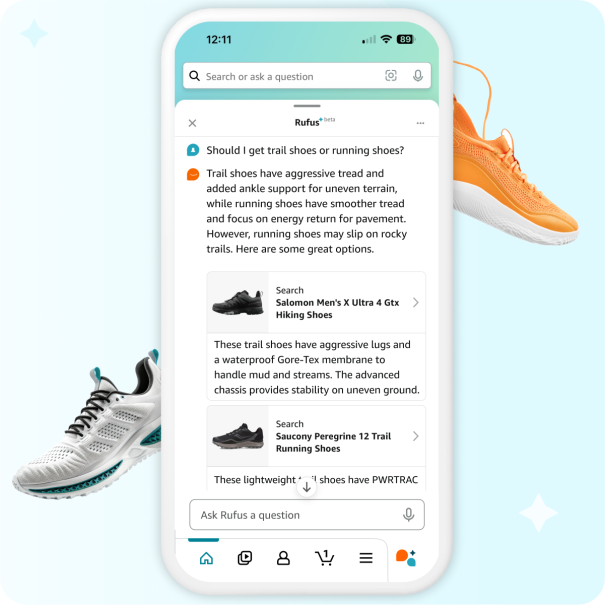
Even when a shopper doesn’t click through traditional search results, Rufus can still shape perception and preference. Conversion now happens both on the product page and inside AI-assisted conversations, and the quality of your content directly affects how confidently Rufus can recommend your product.
Early Brand Insights on Amazon Rufus' Impact
A 210% increase in interactions in 2025 shows that Rufus is changing how customers shop on Amazon. Usage continues to grow as more shoppers rely on the assistant to compare options, evaluate value, and make decisions faster. This confirms a shift toward AI-mediated shopping, where intent is shaped through conversation.
Brands are responding by prioritizing structured content, clarity, and natural language tone. Accurate specifications, consistent messaging, and strong imagery with detailed alt tags help AI systems interpret products more effectively. Reviews and Q&A are gaining importance because Rufus relies on them to summarize sentiment and answer shopper questions.
Visibility dynamics are also shifting. Products with strong content and trust signals can surface in conversational recommendations even when they are not leading traditional search results. Differentiation and clear positioning are becoming more important as AI summarizes choices for shoppers.
This is where generative commerce begins to take shape. Generative Engine Optimization (GEO) is the next evolution of search strategy, where AI-driven discovery sits alongside traditional SEO.

Preparing for Rufus: Strategic Pillars Brands Should Consider Now
With continuous improvements and growing use of Amazon Rufus, brands need to rethink how they appear in AI-driven conversations, not just traditional search results.
At a strategic level, we identify five core pillars that brands should prioritize now:
Product Content Designed for AI Understanding
Rufus depends on structured, clear, and comprehensive product information to answer shopper questions accurately. Titles, bullet points, attributes, and descriptions must communicate benefits and use cases in plain language that an AI system can easily interpret and present in conversation.
Reviews and Q&A Reinforcing Critical Benefits
Rufus heavily relies on reviews and customer questions to validate claims and summarize sentiment. Brands need review coverage that consistently reflects core value propositions, outcomes, and real-world use cases important to shoppers.
Creative Responses to Real Shopper Questions
Images, A+ content, and videos are no longer just visual assets. They support how Rufus explains products. Creative should clearly demonstrate functionality, differentiation, and context of use, reinforcing the same story your copy and reviews convey.
Advertising Supporting Product Discovery
As Rufus guides shoppers earlier in their journey, advertising plays a vital role in shaping awareness and consideration, not just closing sales. Brands that focus solely on lower-funnel retargeting risk losing visibility when AI influences initial product selection.
Search Strategies That Go Beyond Keywords
Keyword coverage still matters, but Rufus responds to intent-based questions, comparisons, and scenarios. Brands need to understand the problems their products solve and how those answers appear across listings, content, and reviews.
These pillars establish the foundation for competing in AI-mediated commerce. We will explore how to operationalize them in detail during our next webinar.
Tactical Takeaways for Winning with Amazon Rufus AI
Turn theory into action by joining our upcoming webinar, "The Future of Amazon Growth: How AI Is Reshaping Discovery, Media, and Conversion." We'll share valuable industry insights, including:
- How Amazon Rufus is transforming product discovery through conversational shopping
- Why PDPs now power AI visibility and must answer real shopper questions, not just keywords
- How brands should shift from bottom-funnel selling to full-funnel storytelling
- What Rufus prompts and “why choose” queries reveal about modern buyer intent
- How advertising, creative, and content must align to win in AI-driven commerce

Our experts will discuss what they’re seeing across Beauty, CPG, Apparel, and Fitness as Rufus adoption accelerates.
Register for the webinar to learn how leading brands are adapting right now.
Anja Pendic
Anja Pendic is the Content Marketing Specialist at Blue Wheel, where she plays a key role in creating and managing content for the company’s website. With extensive experience in digital marketing, copywriting, and social media management, she crafts engaging blogs, case studies, and landing pages. Anja has worked across various platforms, including Amazon, Meta, and TikTok, delivering impactful content and strategies.