
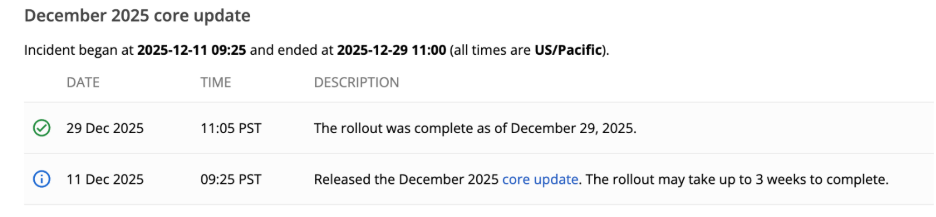
The December 2025 Google Core Update, which started rolling out on December 11 and finished on December 29, occurred during a crucial time for the digital economy. With Black Friday and Cyber Monday (BFCM) sales recently ending and holiday shopping still happening, the update caused significant fluctuations in search rankings during a busy shopping period.
Broader trends, such as AI-driven personalization and voice search, are changing buyer behavior. Meanwhile, Google's focus on "helpful" content continues to emphasize quality over keyword optimization, prompting websites to adapt.
For retailers and marketers, this means potential revenue impacts during peak season, along with platform changes that could redirect traffic. Maintaining or improving visibility depends on following E-E-A-T (Experience, Expertise, Authoritativeness, Trustworthiness) best practices.
Why Is This Important for Brands & the Broader eCommerce Space?
Global eCommerce revenue is expected to reach $4.96 trillion by 2030, even with ongoing instability in organic traffic and rising advertising costs. Many brands depend on scaled content, but core updates highlight the importance of satisfying commercial intent: sites with lower-quality pages often face volatility.
Changes in organic search rankings can influence eCommerce traffic, which affects conversions, cart values, and growth. There are opportunities for user-focused optimizations to regain visibility. During BFCM 2025, over 81 million shoppers worldwide bought from Shopify-powered brands. This latest Google Core Update rewards adaptable, quality-focused sites and underscores the risks of complacency, impacting KPIs like ROAS and LTV.

Google Core Update: Point of View & Expertise
The December 2025 Core Update represents a broad evolution toward rewarding genuine value, rather than a targeted penalty. In 2026, eCommerce brands that adopt holistic SEO, authentic content, and technical excellence are better positioned for strong performance. Past Google Core updates (for example, June 2025) showed recovery through content improvements.
Recommendations include volatility audits via Google Search Console, focusing on high-value pages with expert content, updating timestamps, and improving Core Web Vitals. Adding schema markup and authoritative links, testing changes gradually, and monitoring dwell time are also advised.
The update largely affects commercial searches, where purchase paths begin via search engines, and we expect ranking fluctuations, especially with mobile queries, which face stricter standards. In a growing market, impacts may spill over into paid advertising if organic traffic dips. Niches with strong E-E-A-T signals, like sustainable retail, are more likely to see positive results.
Overview of Recent Volatility Trends
- Volatility trackers revealed notable spikes during rollout, similar to previous updates, affecting sectors such as eCommerce. Specific decline percentages vary widely and are often based on anecdotal data; tools like Semrush and SISTRIX report domain-specific shifts.
- Examples from earlier updates (e.g., March/June 2025) include visibility gains for content-rich sites and losses for thin pages. Early December reports noted fluctuations in the fashion and retail sectors.
- Case studies demonstrate that traffic can rebound through content pruning, adding expert elements, and technical fixes, with improvements seen in some audits.
Winners & Losers: Strategic Takeaways for eCommerce
According to Amsive’s post-update analysis, the December Core Update created a clear divide between winning and declining verticals, with eCommerce emerging as a standout winner and healthcare experiencing measurable visibility losses. These shifts have direct implications for many brands, particularly in the beauty and retail space.
eCommerce Takes the Lead
Apparel and retail brands saw some of the strongest performance gains following the update. This reinforces Google’s continued emphasis on high-quality shopping experiences, including:
- Well-optimized product and category pages
- Clear alignment with transactional search intent
- Trust-building elements like reviews, policies, and brand credibility
- Helpful supporting content that answers pre-purchase questions
For eCommerce and beauty brands, this is a strong signal that brand-owned commerce experiences are being rewarded. Investing in technical performance, UX, and content that supports the buyer journey is more important than ever.
Healthcare Declines Create Competitive Opportunity
At the same time, healthcare and medical publishers saw declines in visibility. This is particularly meaningful for beauty brands, as healthcare sites often dominate searches around skin conditions and treatments, ingredient safety and efficacy, etc.
With healthcare competitors losing ground, beauty brands now have a greater opportunity to compete for these high-intent queries, as long as content demonstrates:
- Real product experience
- Credible expertise and transparent claims
- Clear brand authority and trust signals
What This Means for Beauty Brands
This update is helping level the playing field. Brands that prioritize education-first content strategies, ingredient transparency, expert-backed skincare guidance, and authentic customer proof points are better positioned to capture organic visibility where healthcare publishers previously dominated.
Google is increasingly rewarding brands that deliver real value through strong product ecosystems and credible content. This update presents a clear opportunity to expand organic market share if the right SEO and content strategies are in place.
Google Core Update: Actionable Takeaways
Here’s a step-by-step guide on how to respond to the latest update:
1. Immediate Audit: Use Google Search Console (GSC) to analyze impression/query changes; benchmark Core Web Vitals on revenue-driving pages.
2. Content Overhaul: Improve content with E-E-A-T elements like expertise blurbs, scenarios, dates; consolidate thin content.
3. Technical Tune-Up: Optimize mobile user experience, add product schema, strengthen internal links.
4. Monitor & Adjust: Use tools like Ahrefs and Semrush; A/B test changes to boost engagement.

To secure sustained success after Google's latest Core update, which prioritizes quality and helpfulness, proactive optimization is key. This approach can stabilize or even improve your organic performance. For a customized audit, engaging with specialist partners, such as our eCommerce SEO agency, is a recommended next step.
Lisa Wendland
Lisa Wendland, MBA, is Senior Director of Owned Media at Blue Wheel, an Inc. 5000 omni-channel agency. She leads owned media teams in SEO, Organic Social, Community Management, and Lifecycle (Email/SMS), using AI to enhance efficiency in strategy, ads, and personalization for retail brands. Her data-driven vision drives engagement and retention, supporting over $2B in client ad spend across Amazon, Walmart, and D2C. Collaborating across paid and earned media, Lisa boosts conversions and loyalty, shaping retail marketing innovation.