
Trust has overtaken traditional advertising as the most powerful engine of purchase decisions. Customers today place greater trust in individuals than in brands; in fact, over 69% of them rely more on recommendations from influencers, family, and friends than on direct brand communication.
That’s where the modern influencer mix of UGC creators, commerce creators, and influencers comes in. Content creators are more than just amplifiers of a brand’s message. They are your brand’s storytellers, translating your values, aesthetics, and mission into human voices.
For eCommerce brands, influencer marketing is no longer optional. Through the creators you partner with, you shape how consumers perceive your brand and what it stands for. That’s why smart brands recognize that they're not simply buying attention but earning belief and building customer loyalty.
What Is the Modern Influencer Mix?
The modern influencer mix is a strategic blend of three creator types: UGC creators, commerce creators, and influencers, each contributing a specific kind of trust and impact across the customer journey. While influencers amplify brand identity, UGC creators strengthen authenticity, and commerce creators drive purchase intent.
Brands do not need all creator types at once. It’s a pick-and-choose approach based on:
- brand goals
- KPIs
- where they are in their journey
- budget
- whether they need awareness vs. conversions
For initial content volume, an Amazon brand launching on TikTok Shop could start with UGC. Conversely, a new brand launching in the US might prioritize influencer marketing for initial awareness before integrating social commerce later on.
The 3 Creator Roles in the Modern eCommerce Ecosystem
Understanding the unique role of each creator category allows you to build a full-funnel strategy powered by real people, social proof, and shoppable content.
UGC Creators Are the Authentic Voice of Your Brand
UGC creators are everyday consumers who record product experiences in ways that feel real, attainable, and unscripted. Their content mirrors how people actually shop and decide, which makes it incredibly powerful in a world oversaturated with polished ads. When shoppers see someone they relate to using a product naturally, it instantly builds an emotional connection. In fact, UGC is extremely important for 40% of customers making a purchasing decision.
For eCommerce brands, UGC creators are especially valuable across multiple marketing channels. Their videos, reviews, and lifestyle clips can be repurposed in paid ads, placed on product detail pages, featured in emails, or embedded into social campaigns. This makes UGC one of the most scalable forms of social proof. Most importantly, UGC creators excel at something brands simply can’t manufacture on their own: authentic relatability. Their ability to make a product feel believable is a cornerstone of modern trust-building.
Commerce Creators Serve as Your Conversion Engine
Commerce creators sit at the intersection of content and transaction. They’re the TikTok Shop affiliates, Amazon influencers, and creators whose feeds are built around product reviews and recommendations. Their value lies in making shopping feel natural: not like an ad, but like a trusted friend walking you through what they love and why.
Commerce creators don’t just spark interest; they guide consumers directly to the decision moment. Because they regularly test, review, and demonstrate products, audiences view them as knowledgeable and transparent. This reduces friction in the buying process and shortens the customer journey. With social commerce accelerating, commerce creators have become crucial partners for brands seeking to influence both discovery and conversion simultaneously. They can quickly and credibly turn people’s curiosity into purchases.

Influencers Are Your Brand Amplifiers on Social Media
If you want to bring authority, taste, and cultural relevance to your marketing mix, you will need influencers. Their established audiences look to them for inspiration, leadership, and aesthetic cues. When an influencer posts about your brand, it signals that your product aligns with their personal brand, and by extension, that it deserves attention from their community. For 85% of Gen Z, social media influences purchase decisions, with TikTok and Instagram being the main drivers.
Influencers play a crucial role in shaping perception. They help define your brand’s aesthetic, tone, and positioning within your category, whether you’re a beauty, fitness, CPG, or apparel brand. Because influencers often lead conversations in their niche, they transcend promotion and become advocates who introduce your brand into cultural moments. They’re especially effective for new product launches, storytelling campaigns, and initiatives where you want to build momentum and visibility. Influencer endorsement is a form of borrowed credibility that elevates your brand’s overall reputation.

How Each Creator Type Strengthens Your Brand Trust
Each creator group brings a unique layer of trust to your marketing ecosystem. UGC creators make your brand believable by showing real people in real scenarios with no script or editing. Commerce creators make your brand buyable by blending authentic recommendations with seamless paths to checkout. Influencers make your brand aspirational, giving it cultural weight and emotional relevance.
When all three work together, you create a powerful trust loop that moves customers from discovery to confidence to purchase. Instead of relying on one type of creator for everything, you benefit from a balanced ecosystem that mirrors how people naturally shop and evaluate products today.
Platform Integration: Bringing the Creator Mix to Life
The strongest influencer ecosystem is one where each creator plays to the platform’s strengths. TikTok thrives on relatability, making UGC creators ideal for sparking discovery. Once users shift into shopping mode, commerce creators guide them with credible, fast-acting recommendations. Influencers then elevate everything by generating cultural buzz that pushes reach far beyond the feed.

On Instagram, influencers excel at visual storytelling and brand positioning, while commerce creators help close the loop through product tags, affiliate stickers, or live shopping features. Meanwhile, UGC creators support ad whitelisting, lending authenticity to both organic and paid content.
On Amazon, influencers drive traffic and interest through storefronts and livestreams, while UGC builds trust directly on PDPs where purchase decisions are made. Commerce creators reinforce credibility by sharing detailed reviews or tutorials that help shoppers feel confident in the moment of conversion.
Platforms like YouTube and Pinterest also benefit from this mix. Influencers can dive deep into product education, while UGC creators supply evergreen content that supports retargeting campaigns. When each creator type plays to the strengths of each platform, brands create consistent, trust-driven experiences across the entire shopping journey.
How You Can Build a Scalable Influencer Framework
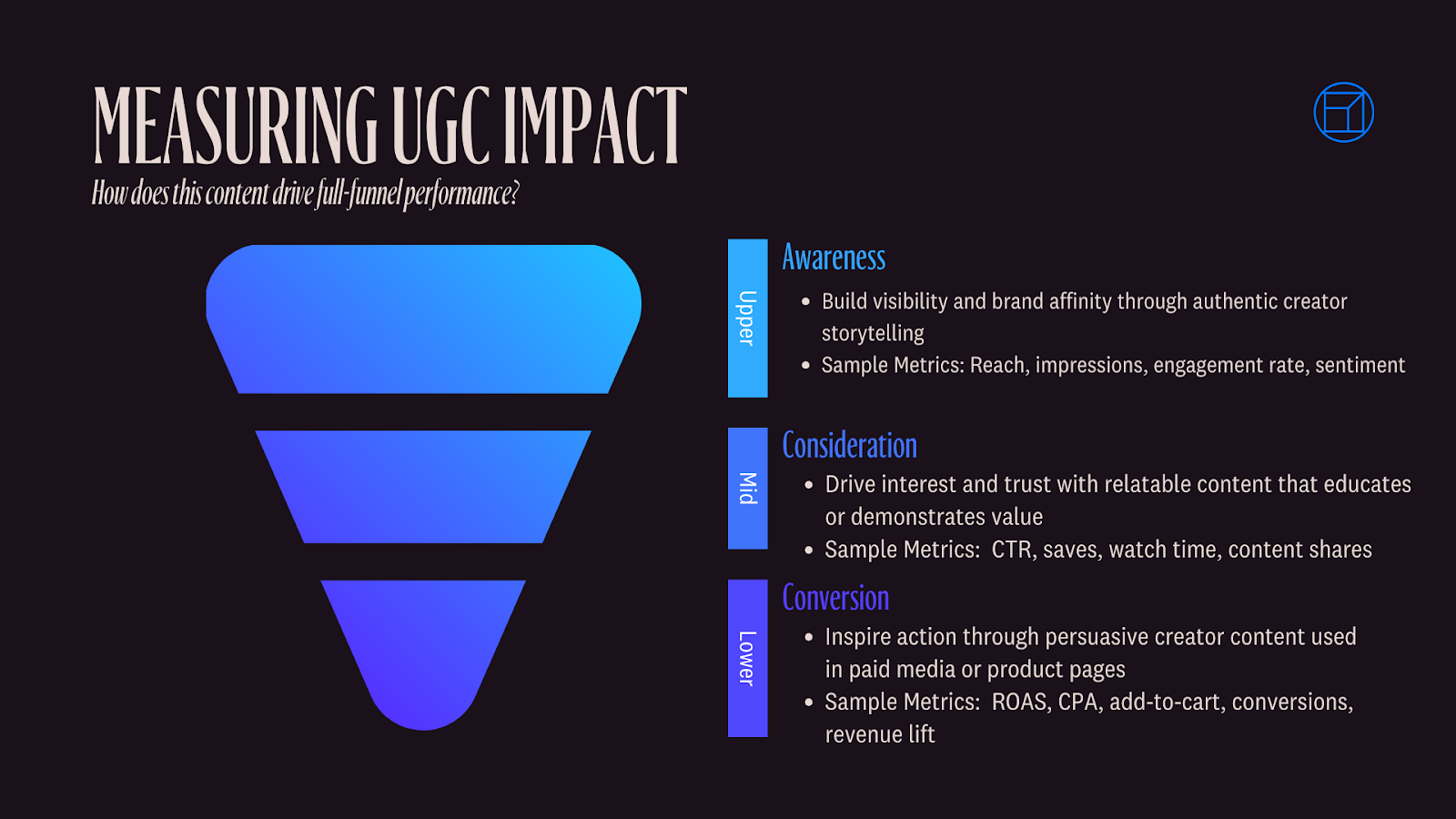
A strong influencer framework starts with clarity. You must define the emotional space you want to own. This becomes the guiding principle for identifying the right creators and shaping the kind of content that feels true to your brand. Once the foundation is clear, you can map each creator category to the marketing funnel in a way that creates a cohesive path from awareness to conversion.
Scaling effectively requires internal alignment. Paid media, organic social, marketplace, and eCommerce teams must share performance insights so that winning content can be reused across channels. A creator video that drives conversions on TikTok may also lift ROAS in Meta ads or dramatically improve PDP engagement. The key is creating systems that allow content to flow seamlessly across teams.
Protecting trust is another critical piece. Brands should maintain clear guardrails for disclosure, creative direction, and messaging, but also allow creators the freedom to showcase the product in their own authentic voice. The most successful creator partnerships come from collaboration, not control.
Finally, measurement and optimization ensure that the modern influencer mix remains effective. Brands should track metrics such as cost per engagement, ROAS, attributed revenue, retention impact, and repeat purchases to understand the unique contribution of each creator type. Over time, this data helps refine your mix and identify which creators offer the strongest ROI.
Key Takeaway: Influence Is Your Brand Definition
Every creator post, whether from a UGC creator, commerce creator, or influencer, functions as a data point in how your brand is perceived. This makes your creator mix your brand strategy.
The most trusted brands don’t just broadcast their story but amplify it through the voices of others. By leveraging UGC creators for authenticity, commerce creators for seamless buying, and influencers for aspirational storytelling, you build a foundation of trust that fuels awareness, conversion, and loyalty.
Ready to create or optimize your modern influencer mix strategy? Consult the Blue Wheel experts today.
Anja Pendic
Anja Pendic is the Content Marketing Specialist at Blue Wheel, where she plays a key role in creating and managing content for the company’s website. With extensive experience in digital marketing, copywriting, and social media management, she crafts engaging blogs, case studies, and landing pages. Anja has worked across various platforms, including Amazon, Meta, and TikTok, delivering impactful content and strategies.