

Amazon has rolled out a new version of the Frequently Returned badge with a bolder look and a deeper impact. The badge appears prominently within the PDP – leading to lower conversion rates. Sellers and vendors can check if their ASINs are already impacted or at risk of the badge by utilizing the Voice of the Customer page. Because the badge can negatively influence conversion rates, advertising performance, and customer trust, brands should actively monitor return data and address potential causes early.
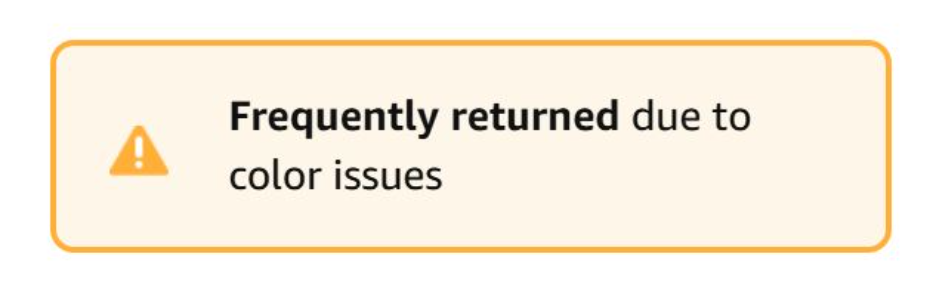
What is the Frequently Returned Badge on Amazon?
The Frequently Returned badge is a warning that appears when an Amazon listing has a return rate that is significantly higher than other comparable products within the category.
- Where it appears: Directly on the PDP in a prominent spot. Amazon appears to be testing different placements, for example, appearing below bullet points, below star ratings, or above product reviews.
- Tracking Frequently Returned Badge ASINs: You can track the ASINs with the Frequently Returned badge by visiting the Voice of the Customer (VOC) page.
- Who is impacted? Brands selling on Amazon, whether through Seller or Vendor Central, can receive the badge if their product receives a high rate of returns.
- What is the purpose? The badge provides customers with a greater level of transparency before purchasing, helping prevent poor customer experiences.
How Did Amazon Change the Frequently Returned Badge?
Amazon recently made several updates to how the Frequently Returned badge appears and how customers can interact with it. In the previous state, the badge existed, but was less prominent on the product page. It often appeared lower on the listing, where many shoppers didn’t notice it.
Now, the Frequently Returned badge often appears closer to the top of the page, sometimes showing in high-visibility areas such as below star ratings. The badge now has a bold font and a yellow-highlighted background, making it rather hard to miss. Another notable change is the modules that can display below the badge, directing customers to competitor listings with lower return rates.
Why Should Brands on Amazon Care About the Frequently Returned Badge?
Amazon’s Frequently Returned badge has a meaningful impact on product performance:
- Impacts conversion rates: The badge is a warning label that creates hesitation for shoppers, leading to lower conversion rates.
- Reduces ad efficiency: When conversion rates drop, ad spend becomes less effective.
- Drives traffic to competitors: In some cases, Amazon is driving traffic to competitors by displaying similar products that customers don’t return as often, just below the badge.
- Impact on organic ranking: Lower conversion rates can eventually affect organic search performance, as Amazon’s algorithm prioritizes listings that convert efficiently.
Steps to Track & Avoid Amazon's Frequently Returned Badge:
Brands can take steps to improve the factors that cause the Frequently Returned badge on Amazon:
Monitor the Voice of the Customer report regularly
Review the Voice of the Customer dashboard to identify:
- ASINs with the Frequently Returned badge
- ASINs at risk of receiving the Frequently Returned badge
- Return reason trends and commonly stated issues
Work to fix your product listings where needed
Improve listing quality based on your identified trends. Some examples include:
- Not as described → fix title, bullets, and product description
- Not as expected → add more images (including lifestyle)
- Doesn’t fit → ensure dimensions and sizing details are 100% accurate
- Found better price → ensure your MAP policy is under control
- Quality complaints → check for manufacturer defects
Key Takeaways:
- Amazon displays a Frequently Returned badge on products with higher-than-average return rates.
- The badge now appears more prominently on product pages, increasing visibility to shoppers.
- Brands should monitor return data and address listing or product issues before the badge appears.
FAQs:
When does the Frequently Returned badge appear?
It appears when a product’s return rate exceeds the return rate of comparable products in the same category.
Where can sellers and vendors see if their products are at risk?
You can monitor impacted and at risk ASINs in the Voice of the Customer (VOC) dashboard.
Can the Frequently Returned badge be appealed and removed?
No. The badge is automatically applied and removed based on return-rate performance.

Julia Asburry is the Senior Marketplace Support Analyst at Blue Wheel, where she plays a vital role in enhancing Account Health and Customer Service management. Her work empowers our clients to not just sustain, but truly thrive in the eCommerce landscape. With over half a decade of diverse experience in the industry, she wears many hats within the organization, bringing a wealth of expertise that propels us forward and helps set us apart.


.png)
.png)
.avif)