TikTok has become an important part of how consumers discover, evaluate, and ultimately purchase beauty products.
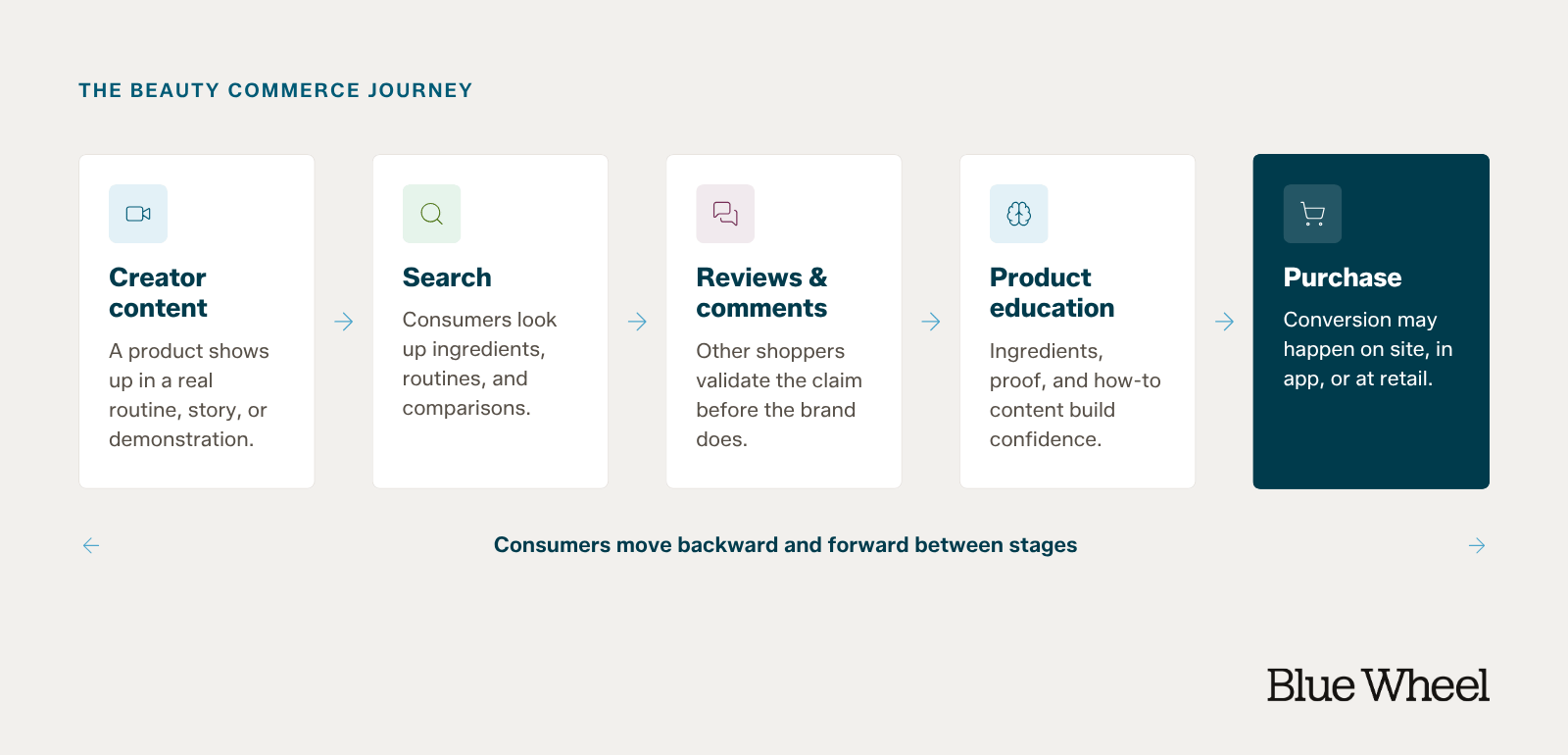
A shopper might first encounter a product through a creator, head to the comments to see what other consumers think, search for reviews or ingredient information, watch a tutorial, and eventually purchase through a brand's website or another retail channel. What looks like a series of individual interactions is increasingly one connected commerce journey.
For beauty brands, that changes the role TikTok should play in the marketing mix.
Success is no longer just about creating viral content or using TikTok as another paid social conversion channel. Brands (beauty and beyond!) need to connect creative, creators, search, paid media, commerce, and measurement across the full customer journey.
Why TikTok Matters for Beauty Product Discovery
Beauty has always been a category shaped by recommendations. Consumers want to see products in action, understand how they work, hear from people they trust, and determine whether a product is right for their individual needs.
TikTok brings many of those behaviors together in one environment and has evolved beyond a beauty inspiration platform. Consumers are using it for discovery, education, product research, reviews, tutorials, and now, even more for search.
But discovery isn't limited to what appears in the For You feed.
Discovery Happens Through Community
Comments, creators, tutorials, and educational content all play a role in helping consumers move from discovering a product to considering whether they should purchase it.
TikTok's research highlights comments from other users, tutorials and tips, educational content, and creator endorsements among the types of content that can influence beauty purchases.
That means the conversation happening around a piece of content can be almost as important as the content itself.
For brands, community engagement shouldn't be viewed simply as another engagement metric. Comments can surface product questions, frustrations and concerns, desired use cases, ingredient questions, and the language consumers use when evaluating products.
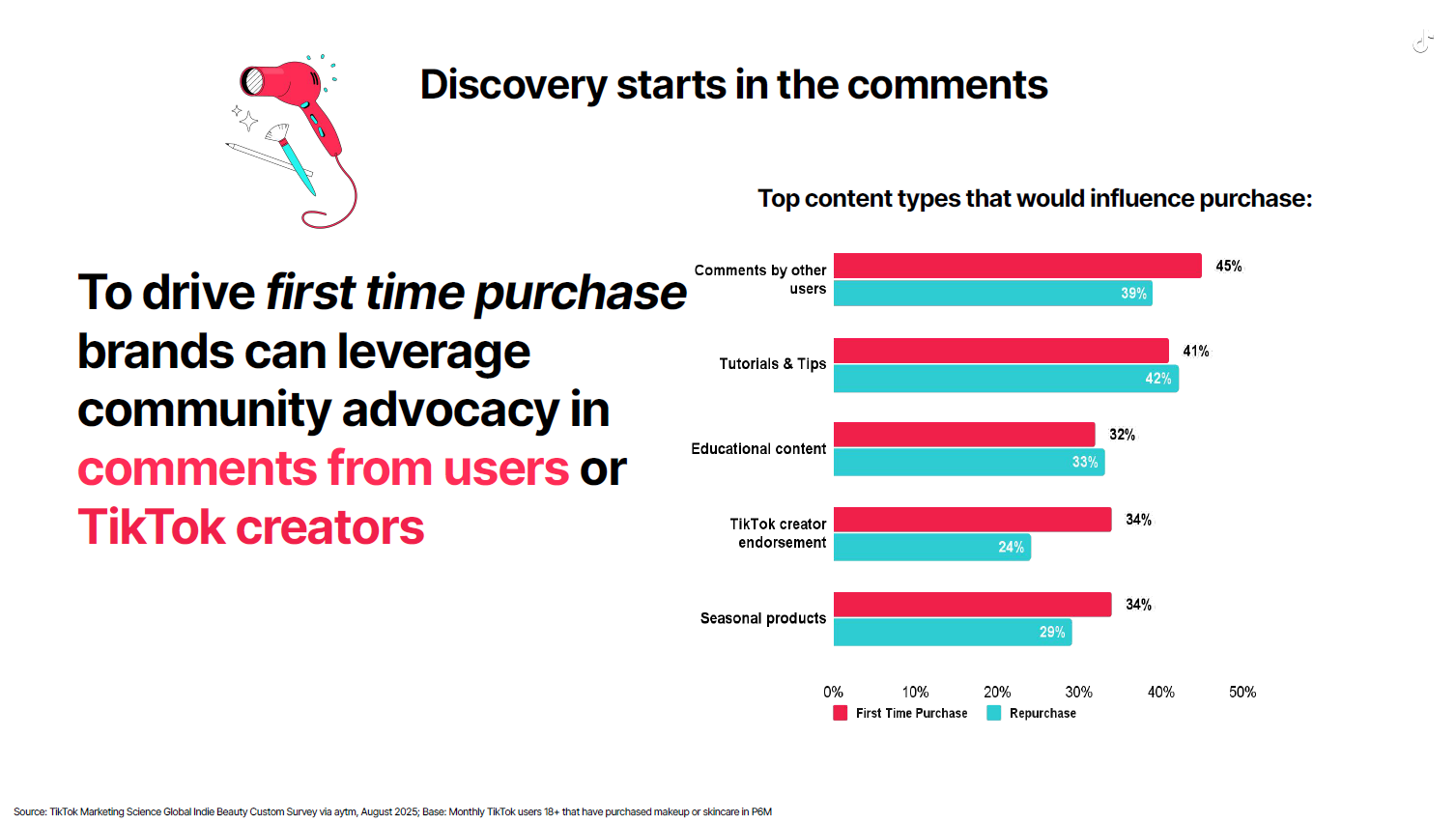
Those signals can then inform future creative, product education, creator briefs, paid media, and PDP content.
Transparency Is Becoming Part of the Purchase Decision
Beauty consumers also want more information before making a decision.
Research has found that 80% of surveyed TikTok users are more likely to purchase from a beauty brand if it is transparent about its ingredients and practices. Fifty-eight percent would like to see content highlighting ingredients, while 53% expressed interest in behind-the-scenes or product-making content. For beauty brands, this creates an opportunity to move beyond product-first creative.
Ingredient education, expert perspectives, demonstrations, routines, real customer experiences, and behind-the-scenes content can help answer the questions consumers have before they buy.
The objective isn't simply to tell consumers that a product works, but to give them enough information to understand why it may work for them.
Stop Treating TikTok as a Lower-Funnel Conversion Channel
As performance expectations increase, it can be tempting to concentrate TikTok investment around audiences that are already close to purchasing, but that approach overlooks much of the platform's influence.
Relying too heavily on lower-funnel audiences can eventually limit scale and increase pressure on acquisition efficiency. A more complete TikTok strategy uses different media and creative approaches to build awareness, generate consideration, and capture existing demand. For beauty brands, each stage requires a different job from creative and media.
Awareness: Build Relevance Before Asking for the Sale
At the top of the funnel, the goal is not necessarily to convince someone to buy immediately, but rather it's to earn attention and introduce the brand or product in a way that feels relevant to how consumers use TikTok.
Creator storytelling, educational content, culturally relevant conversations, demonstrations, trends, and relatable beauty problems can introduce a product without forcing an immediate conversion message. This is where brands begin creating demand rather than simply capturing it.
Consideration: Turn Attention Into Intent
Once consumers are familiar with the product, creative can answer more specific questions: How does it work? Who is it for? What ingredients does it contain? How does it fit into an existing routine? What results have other people experienced?
Product reviews, tutorials, tips, hacks, ingredient education, before-and-after content, and creator demonstrations can help consumers evaluate those questions. This is also where search becomes increasingly important.
Conversion: Meet Demand When Consumers Are Ready
Lower-funnel media still matters – its role however becomes stronger when awareness and consideration have already done their jobs. Catalog advertising, retargeting, promotional messaging, product-focused creative, and clear paths to purchase can help convert consumers who have already built familiarity and confidence. For brands selling through TikTok Shop, shoppable videos, LIVE, and affiliate creator content can also shorten the path from discovery to purchase without leaving the app.
Creative should evolve alongside that journey. Awareness content can focus on authentic and participatory storytelling. Consideration can move deeper into reviews and education. Performance creative can introduce urgency, promotions, how-to-buy messaging, and stronger reasons to act.
The larger takeaway: not every piece of TikTok content needs to sell the product immediately. Each interaction can have a different job within the purchase journey.
TikTok Search Is Becoming a Critical Part of Beauty Discovery
Consumers aren't only scrolling until a relevant product finds them. They're also actively searching TikTok for products, routines, ingredients, reviews, tutorials, and solutions. That behavior creates another opportunity for beauty brands to meet consumers when intent is already forming.
A TikTok Search Ads case study featuring Glossier demonstrates the potential. The brand used beauty and skincare-related keywords to reach consumers on TikTok's search results page. According to the case study, the campaign generated more than 8,500 additional site clicks and 1,000 conversions attributed to the campaign, along with a 188% more efficient conversion rate.
According to TikTok, 57% of users use the platform's search functionality, creating an opportunity for beauty brands to connect content and advertising with the questions consumers are already asking.
But the implications extend beyond paid Search Ads.
Create Around Questions, Not Just Trends
Beauty brands should increasingly think about the language consumers use when actively researching products.
That might include searches such as:
- best moisturizer for dry skin
- how to repair damaged hair
- retinol for beginners
- mineral vs. chemical sunscreen
- how to use hyaluronic acid
- best foundation for oily skin
- [product name] review
- [brand name] before and after
Those searches represent needs, questions, and problems.
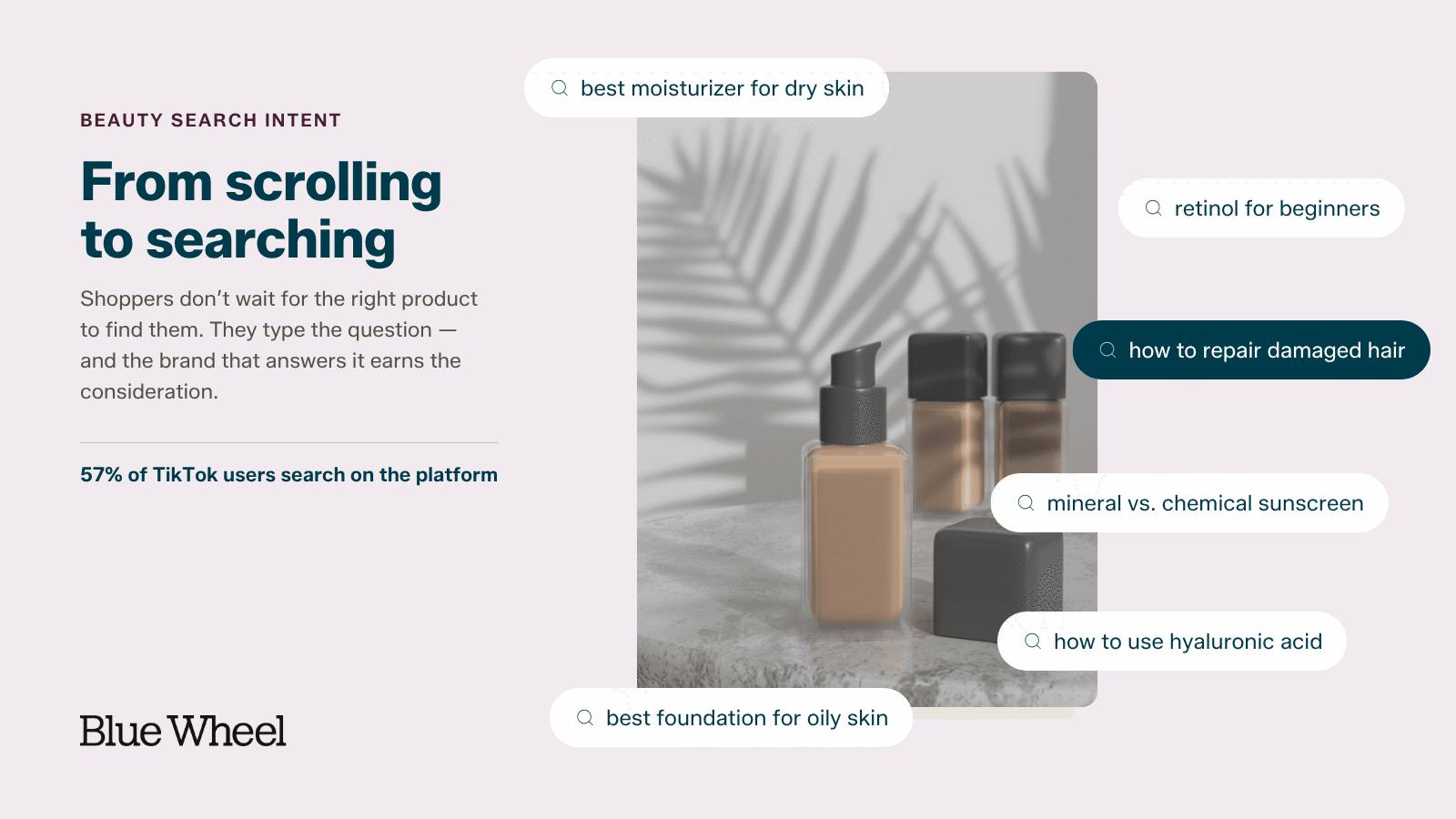
Brands can use those signals to build content that remains useful beyond a single trend cycle. The same consumer language can inform creator briefs, paid search strategies, website content, PDP copy, FAQs, and broader organic search efforts.
This is where TikTok starts to look less like an isolated social platform and more like another layer of product discovery.
What TikTok Creative Works for Beauty Brands?
Of course, there is no single creative formula guaranteed to perform on TikTok. But rather than trying to replicate a rigid TikTok aesthetic, beauty brands should develop creative systems that allow them to test different messages, formats, creators, and concepts while remaining native to how consumers use the platform.
Four principles are particularly relevant for beauty.
Build Trust Through Transparency
Beauty products often require consumers to believe a claim before they can experience the result themselves. Brands can reduce that uncertainty by showing rather than simply telling. Ingredient breakdowns, real product applications, expert perspectives, customer testimonials, demonstrations, and creator experiences can give consumers more information to evaluate.
Credible voices such as dermatologists, chemists, makeup artists, and other relevant experts can also provide additional education where appropriate. The goal is credibility, not perfection.
Connect Product Attributes to Consumer Priorities
Consumers want to understand more than the end result. Depending on the product and audience, their focus may be on clean ingredients, formulation, packaging, brand practices, or other attributes that influence purchase decisions. The key is to make those messages tangible.
Instead of simply saying a product contains a particular ingredient, explain why the ingredient matters. Instead of making broad brand claims, show how those commitments appear in the product or customer experience.
Show Transformation and Results
Beauty is inherently visual, which makes product transformations particularly powerful. Before-and-after demonstrations, time-lapse tutorials, first reactions, routines, unboxings, and real customer stories can help consumers visualize what a product could do for them.
The most useful content doesn't just show the finished result. It provides enough context for consumers to understand how the product was used and what they might realistically expect.
Create for Community and Conversation
Some of the strongest beauty content doesn't end when the video does. Instead, it generates questions, recommendations, responses, stitches, reviews, and additional content.
Engaging with niche beauty communities, encouraging audience participation, and amplifying user-generated content can help brands become part of those conversations rather than simply advertising alongside them. For brands, that often means shifting the creative question from "What should we post?" to "What conversation can we create or contribute to?"
Creators Should Be Part of the Media Strategy
Oftentimes, creators are managed separately from paid media. One team handles influencer partnerships while another manages advertising budgets and performance, but that separation can leave valuable insights from reaching the other.
Creator partnerships can help brands identify the people, messages, demonstrations, and product benefits that resonate with consumers. Strong creator content can then be amplified through paid media, generating additional signals about audiences and messaging. Those learnings can feed back into future creative.
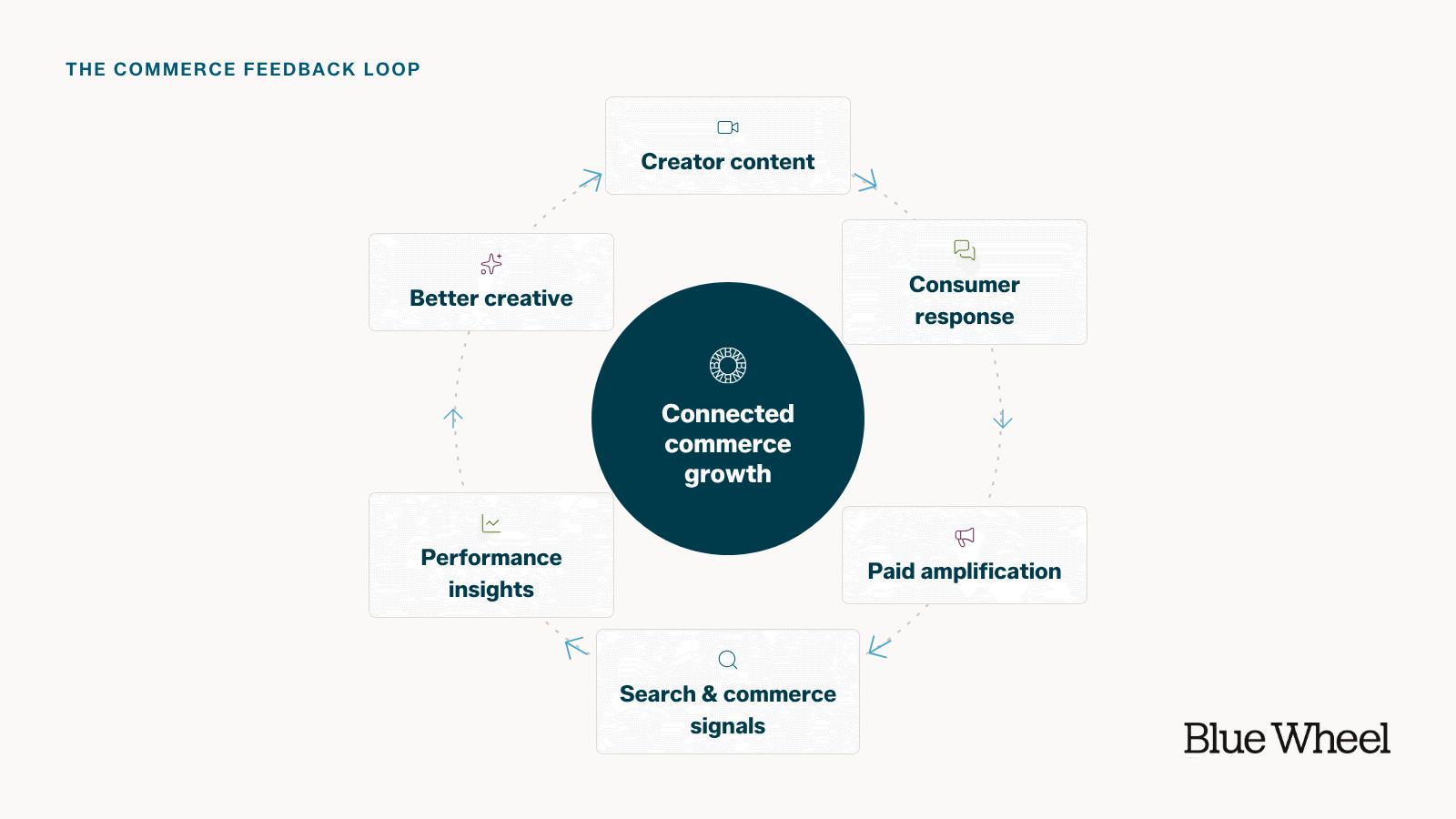
The takeaway isn't simply to invest more in creators. It's to stop treating creator content, paid media, and measurement as disconnected strategies.
Why Last-Click Attribution Can Undervalue TikTok
Consider a shopper who discovers a new skincare brand through a creator. They watch another video, read comments, search for the product, visit the website, leave, and ultimately purchase later through another channel.
Which interaction receives credit? In a last-click model, TikTok may receive little or none.
That's why evaluating TikTok solely through platform-reported conversions or last-click ROAS can provide an incomplete picture of its contribution to the customer journey.
That doesn't mean brands should abandon performance measurement. It means the measurement framework needs to evolve with the customer journey.
Build a More Complete Measurement Framework
A stronger approach considers four areas:
1. Robust data connection
Reliable signals are the foundation. TikTok recommends using Pixel and Events API with advanced matching. According to TikTok, advertisers using both Pixel and Events API see, on average, 19% more events captured and a 15% improvement in CPA compared with using Pixel alone.
2. Incrementality
Incrementality testing helps determine whether advertising actually caused additional business outcomes that would not otherwise have occurred.
Instead of asking, "Did someone convert after seeing an ad?" brands can also ask, "Did this investment generate conversions we wouldn't have received without it?"
3. Cross-channel comparison
TikTok doesn't operate independently from search, marketplaces, retail media, paid social, or other channels.
Multi-touch attribution and media mix modeling can provide additional context around how channels work together and contribute to business outcomes.
4. Calibration
Brands can use these additional measurement approaches to calibrate attribution and develop a more complete understanding of ROI.
For commerce leaders, the goal is to measure TikTok based on its contribution to commerce, not simply the conversions visible inside one platform.
What Beauty Brands Should Do Next on TikTok
The opportunity for beauty brands on TikTok extends far beyond creating more content.
As product discovery becomes increasingly fragmented, brands need to understand how TikTok connects with the rest of the consumer journey.
That starts with these priorities:
- Build for the full funnel. Balance demand creation with demand capture rather than concentrating investment entirely at conversion.
- Create around consumer questions and intent. Use search behavior, comments, and community conversations to understand what consumers actually want to know.
- Connect creators with the broader media strategy. Use creator partnerships not only for reach, but as a source of creative, consumer insight, and scalable paid media assets.
- Prioritize education, transparency, and proof. Help consumers understand products, ingredients, use cases, and results rather than relying solely on promotional messaging.
- Measure TikTok's broader commerce impact. Layer platform reporting with incrementality, cross-channel measurement, and other attribution approaches to better understand TikTok's role in growth.
TikTok's role in beauty commerce is expanding alongside the way consumers make decisions. Discovery can begin with a creator. Validation can happen in the comments. Research can continue through search. Education can build confidence. Paid media can amplify the right message. And conversion may happen somewhere else entirely.
For beauty brands, the opportunity isn't simply to get better at TikTok but to connect TikTok to the larger commerce ecosystem around it.
At Blue Wheel, we connect media, creative, creators, marketplaces, and measurement to help brands build more unified commerce strategies. Connect with our team to explore how TikTok can support growth across your broader customer journey.

Lauren Palmisano
Lauren Palmisano is the Marketing Manager at Blue Wheel, where she manages all aspects of the company’s content marketing strategy. From overseeing the content calendar to managing blog and case study creation, website maintenance, and running Blue Wheel’s LinkedIn page, Lauren plays a pivotal role in driving the brand’s digital presence. With a career that started in eCommerce event management before transitioning into eCommerce marketing, Lauren brings a well-rounded approach to delivering impactful content and experiences that resonates with audiences.