
Both micro and macro influencers play an important role in modern creator marketing, but they solve different business challenges. While micro creators often generate stronger engagement, trust, and conversion, macro creators remain valuable for expanding reach and accelerating brand awareness.
The most effective creator marketing strategies combine both based on campaign objectives rather than follower count alone. As social commerce, retail media, marketplaces, and AI-powered discovery continue to converge, brands are shifting from influencer campaigns to connected creator ecosystems that support the entire commerce journey.
The Different Creator Types
The influencer marketing conversation has often centered around one question: Should brands partner with micro or macro influencers?
Marketing budgets are limited, and choosing the right creator partnerships can have a significant impact on campaign performance. As brands invest more heavily in creator marketing, they naturally want to understand which creators deliver the strongest return.
The challenge is that the conversation often focuses around follower count. While in reality, follower count is only one variable among many that influence campaign success. Audience trust, content quality, platform behavior, creative strategy, and business objectives all play an equally important role in determining whether a creator partnership drives meaningful results.
What Is a Micro Influencer?
Micro influencers are often recognized for cultivating highly engaged communities around specific interests or lifestyles. Their audiences tend to perceive recommendations as more personal, making them especially effective for product education, reviews, and community-driven conversations.
What Is a Macro Influencer?
Macro influencers, by comparison, offer significantly broader reach. Their larger audiences allow brands to introduce products at scale, generate cultural relevance, and create momentum around major launches or seasonal campaigns.
Both creator types deliver value, but the difference lies in the role they play within a broader marketing strategy.
How Are Creators Categorized?
Before exploring how creator marketing has evolved, it's helpful to establish the traditional distinctions between creator tiers.
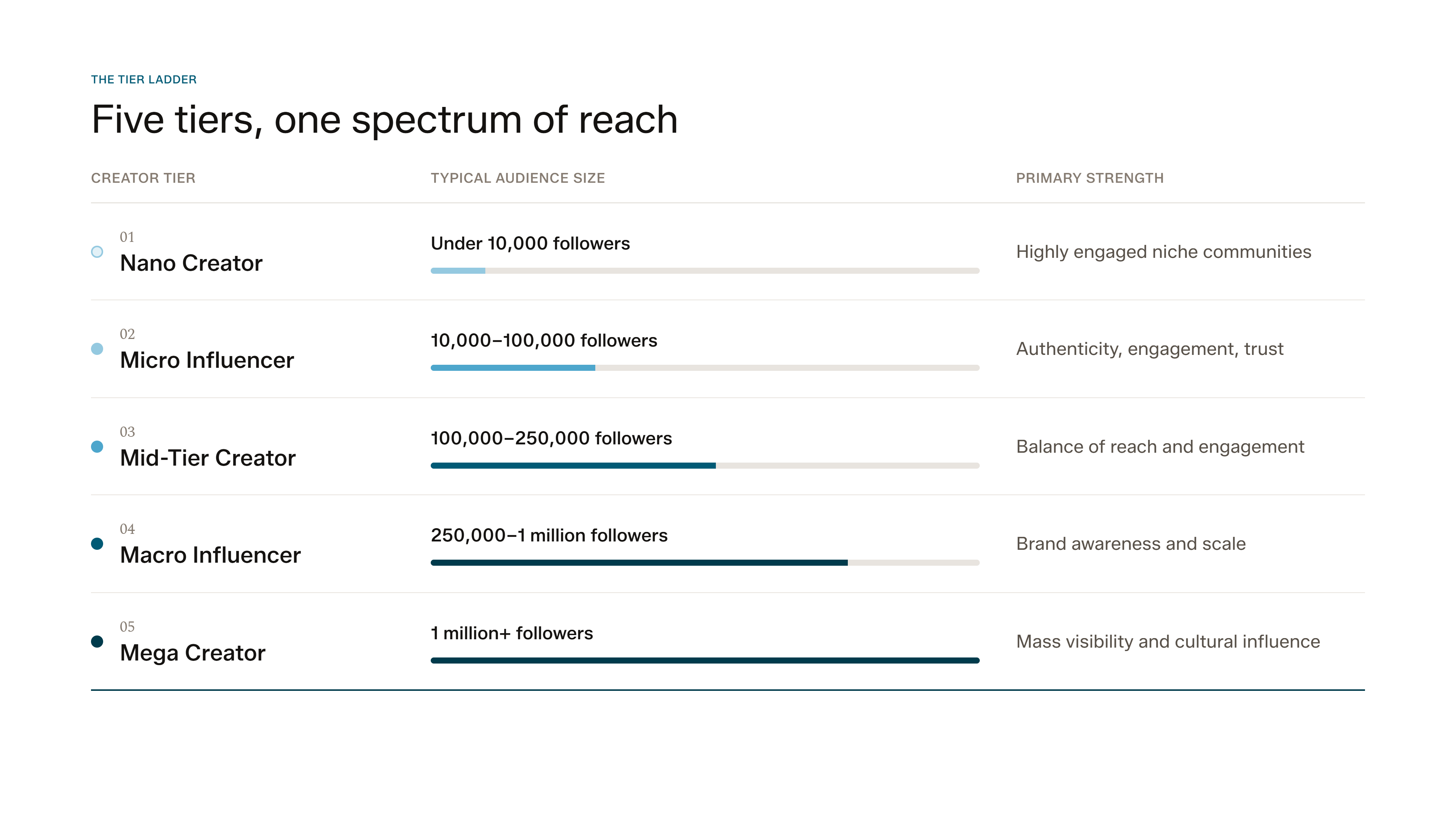
While audience thresholds vary slightly by platform, these categories have traditionally helped brands estimate campaign reach, pricing, and engagement expectations.
Are Micro Influencers Better Than Macro Influencers?
The short answer is that neither creator tier is inherently better than the other because they are designed to accomplish different objectives.
A brand introducing a new product nationally may prioritize awareness and broad visibility, making macro influencers their best choice. A brand focused on educating shoppers, generating authentic product reviews, or increasing purchase confidence may find greater success working with micro creators whose audiences have developed stronger relationships with the person behind the recommendation.
This distinction becomes increasingly important as creator marketing matures.
Choosing Creators Based on Business Objectives
Rather than asking which creator type performs better overall, marketers are beginning to ask a more strategic question: Which creator is best suited to influence this particular stage of the customer journey?
That subtle shift changes the conversation entirely. Instead of viewing creators as interchangeable media placements, brands begin viewing them as specialists who contribute unique value across awareness, consideration, conversion, and loyalty. It's a much more sophisticated way to think about creator marketing, and one that reflects how consumers actually shop today.

Micro vs. Macro Creators: Different Roles, Different Outcomes
When should brands invest in micro creators, macro creators, or both?
The answer depends less on audience size than it does on what you're trying to accomplish. Every creator partnership should support a specific business objective. That objective might be introducing a new product, educating shoppers, creating high-performing creative for paid media, driving affiliate sales, or generating reusable content for marketplaces and owned channels.
When Micro Creators Deliver the Greatest Value
Micro creators consistently deliver something consumers increasingly value: authenticity. Their audiences are often built around shared interests rather than mass appeal. As a result, product recommendations tend to feel more conversational, educational, and credible than highly polished sponsorships. That trust becomes particularly valuable when consumers are evaluating products, comparing options, or looking for reassurance before making a purchase.
Why Micro Creators Perform Differently
Several characteristics make micro creators especially effective in performance-driven campaigns. They typically cultivate closer relationships with their audiences, creating stronger engagement through comments, conversations, saves, and shares. Their communities often view recommendations as genuine experiences rather than advertisements, making product education feel more natural.
This authenticity also translates well into paid media. Creator content that feels native to the platform frequently outperforms highly produced brand creative because it reflects how consumers already engage with content in their feeds.
Where Micro Creators Create the Most Business Value
Micro creators are particularly well suited for:
- Product education and demonstrations
- User-generated content (UGC)
- Affiliate and social commerce programs
- Paid social creative
- Whitelisting campaigns
- Community building
- Product reviews
- Always-on creator programs
These use cases all share one common characteristic: they rely on trust to influence purchase decisions.
While our own findings don't suggest that micro creators should replace macro creators, they do reinforce an important point: creator effectiveness is increasingly driven by audience trust and creative relevance rather than follower count.
When Macro Creators Create the Greatest Impact
Macro creators remain an essential component of many creator strategies, particularly when the objective is to maximize visibility in a short period of time. Their ability to introduce products to large audiences makes them especially valuable during product launches, seasonal campaigns, retail partnerships, and brand awareness initiatives where scale matters.
Large audiences also create social proof. Seeing a recognizable creator recommend a product can accelerate familiarity and legitimacy, particularly for emerging brands entering competitive categories.
Where Macro Creators Create the Most Business Value
Macro creators often perform best when brands need to:
- Introduce new products
- Build awareness quickly
- Generate broad reach
- Support major retail launches
- Increase cultural relevance
- Create momentum around seasonal campaigns
These partnerships often represent the first touchpoint in the customer journey rather than the final conversion.
The Trade-Off Between Reach and Efficiency
As audiences grow, engagement behavior often changes. Larger creators typically reach significantly more consumers, but those audiences may interact less frequently with individual posts. Sponsorships can also become more common, reducing the perceived authenticity of product recommendations.
Our own internal analysis reflects this broader pattern. Macro creators consistently generated strong awareness and reach, but engagement quality and paid performance were generally less efficient than campaigns driven by micro creators.
That doesn't diminish the importance of macro creators, but it does reinforce that awareness and conversion should not be measured by the same standard.
Why the Best Creator Strategies Use Both
Perhaps the biggest misconception in creator marketing is that brands need to choose between micro and macro creators. In our experience, the highest-performing programs rarely make that choice.
Instead, they intentionally combine creator types to support different moments in the customer journey.
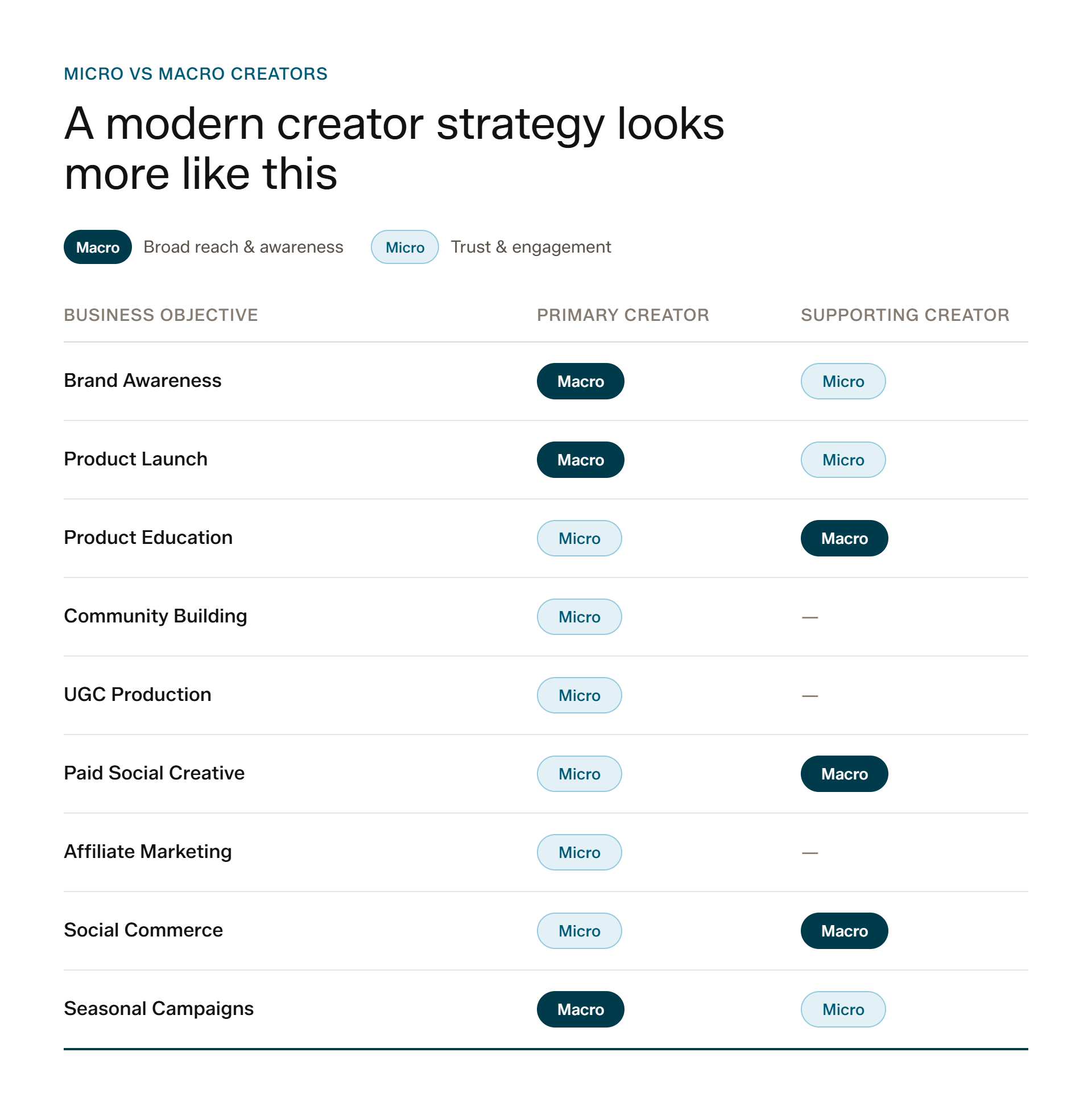
Successful creator programs build complementary portfolios rather than relying on a single type of creator to accomplish every objective.
The Evolution of Creator Marketing
The traditional comparison between micro and macro influencers often assumes that creator partnerships exist primarily to generate impressions or engagement on social media. While that assumption made sense several years ago when influencer marketing was largely measured by reach, likes, comments, and follower growth, today's commerce landscape looks very different.
Consumers rarely discover, evaluate, and purchase products within a single channel. A shopper might first encounter a product on TikTok, research reviews on YouTube, compare options on Amazon, receive a retargeting ad on Instagram, and finally complete a purchase after reading customer reviews or visiting a brand's website.
Throughout that journey, creator content often appears multiple times in different contexts. A single product review may begin as an organic social post, then become paid social creative, appear on a marketplace product detail page, support email marketing campaigns, or reinforce messaging across retail media placements. Increasingly, that same content also contributes to the structured information that AI-powered shopping experiences use to understand products and brands.
In other words, creator content has become significantly more valuable than the original post itself. That evolution changes how brands should evaluate and measure creator partnerships. With access to more advanced measurement tools, marketers have begun connecting creator activity to website traffic, conversion rates, customer acquisition costs, and lifetime value.
This shift transformed creator marketing from a top-of-funnel awareness tactic into a measurable growth channel. So instead of asking how many impressions a creator generated, brands should be asking how creator content contributes across the entire commerce ecosystem.
What Blue Wheel Is Seeing Across Creator Campaigns
This evolution of creators is also being reflected in our own client work.
Engagement Favors Trust
Across Blue Wheel's Q1 2026 creator campaigns, micro creators consistently demonstrated stronger performance across several engagement and efficiency metrics, particularly in paid social and whitelisting environments. Their content generated stronger audience interaction, higher click-through rates, and lower cost-per-click than macro creator content across the campaigns analyzed. At the same time, macro creators continued to play an important role in generating awareness, broad reach, and social proof.
Performance Depends on More Than Audience Size
What stood out most wasn't that one creator tier consistently outperformed the other, but it was that audience size alone proved to be a poor predictor of campaign success.
Instead, the strongest-performing partnerships shared a different set of characteristics. Authentic storytelling, audience trust, creative quality, and relevance to the product consistently mattered more than follower count by itself. Those observations mirror broader industry trends showing that creator effectiveness increasingly depends on how well content resonates with shoppers rather than how many people see it.
That realization is leading many brands to consider how different creator partnerships work together to support the customer journey from discovery through purchase.
The Future of Creator Marketing Is Connected
The debate over micro vs. macro influencers isn't going away, and for good reason. Both creator types play an important role in helping brands reach new audiences, build trust, and drive growth. But as commerce continues to evolve, it's becoming clear that follower count is no longer the most important factor in creator strategy.
Consumers don't experience brands through a single channel. They discover products on social media, research on marketplaces, compare reviews, engage with paid advertising, and increasingly rely on AI-powered search and shopping experiences before making a purchase. Creator content has the opportunity to influence each of those moments, making it far more valuable than a single sponsored post.

Think Beyond Individual Creator Campaigns
The brands seeing the greatest return from creator marketing aren't asking whether they should work with micro or macro influencers – they’re building creator programs that support multiple business objectives across the customer journey. That means selecting creators based on the role they play rather than the size of their audience. A macro creator may introduce thousands of new shoppers to your brand, while a portfolio of micro creators reinforces product benefits, answers questions, and builds the trust needed to convert.
When those efforts work together, creator marketing becomes more than an awareness tactic. It becomes a connected growth strategy.
Final Takeaways
The most successful brands aren't simply investing in creators. They're investing in a network of trusted voices and reusable content that supports paid media, marketplaces, social commerce, owned channels, and emerging AI discovery experiences. Every creator partnership should strengthen the broader commerce strategy, creating assets and insights that continue to deliver value long after the original campaign ends.
As social platforms, retail media, marketplaces, and AI-powered shopping become increasingly connected, brands that treat creators as long-term strategic partners, rather than isolated campaign tactics, will be better positioned to adapt to the next generation of commerce.
The conversation around micro vs. macro influencers is evolving because commerce itself is evolving.
The brands that continue to measure creator success solely by follower count or campaign reach risk overlooking the broader value creators can deliver across today's connected commerce landscape.

Lauren Palmisano
Lauren Palmisano is the Marketing Manager at Blue Wheel, where she manages all aspects of the company’s content marketing strategy. From overseeing the content calendar to managing blog and case study creation, website maintenance, and running Blue Wheel’s LinkedIn page, Lauren plays a pivotal role in driving the brand’s digital presence. With a career that started in eCommerce event management before transitioning into eCommerce marketing, Lauren brings a well-rounded approach to delivering impactful content and experiences that resonates with audiences.